Types of composting
There are really only three decisions: do you want it fast or easy, do you have outdoor space, and will you be composting food waste or garden waste. Everything below follows from those. Below: how types of composting works in practice, what it demands of you, and who it actually suits.
Method comparisons usually read like a catalogue. This one is ordered by how people actually choose: by constraint, not by curiosity. Most beginners are better served by the least glamorous option on the list.
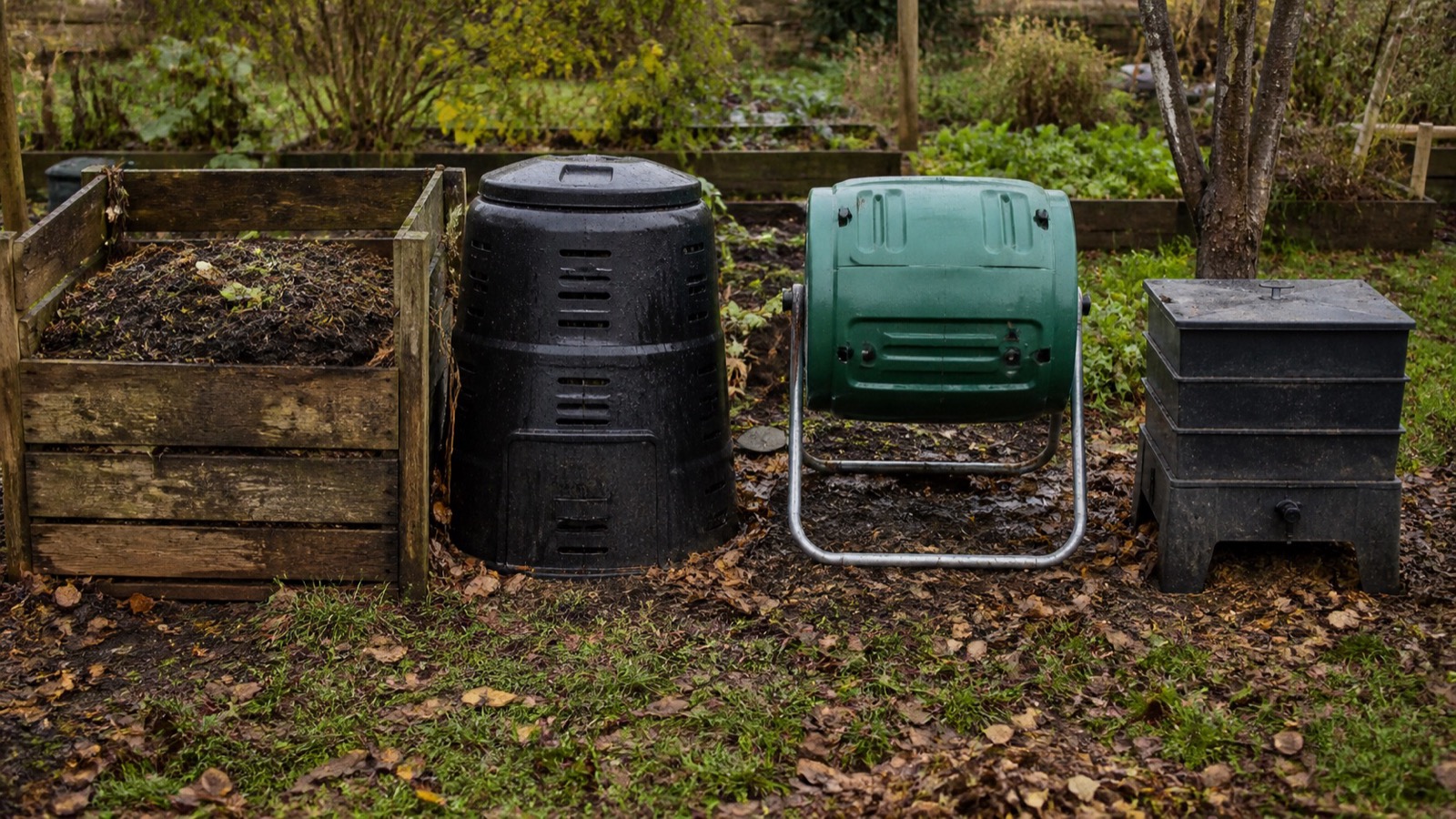
Start here
- Backyard compostingThe default: a heap or bin in the corner. What it needs and what it does not.
- Hot compostingFinished compost in weeks, at the cost of building the pile all at once.
- Cold compostingAdd as you go, wait a year. The method most people are actually doing.
- Vermicomposting (worm bins)Kitchen waste, indoors or on a balcony. Livestock, with all that implies.
- BokashiFermentation, not composting. Takes meat and dairy, but the output still needs somewhere to go.
- Tumbler compostingEasy turning, rodent resistance, and less capacity than the price suggests.
- Trench compostingBury it and forget it. No bin, no turning, no smell.
- Leaf moldLeaves alone, left to fungi. The easiest soil improver there is.
- Community compostingDrop-off schemes and shared sites when you cannot compost at home.
- Apartment compostingNo outdoor space at all. Three options that genuinely work.
Fast or easy, you pick one
Hot composting produces usable compost in four to eight weeks. It also requires you to accumulate a cubic metre of material and build the whole pile in one go, then turn it every few days. Cold composting takes six months to two years and asks almost nothing of you.
Neither is better. A hot pile suits someone with a garden generating waste in bulk; a cold heap suits someone adding a caddy of kitchen scraps twice a week. Most people who set out to hot compost end up cold composting, because life intervenes. That is a fine outcome.
If you have no outdoor space
A worm bin or a bokashi bucket, and be honest about which. A worm bin is livestock. It needs feeding, draining and occasional rescuing. Bokashi is a fermentation bucket that produces pickled food waste, not compost; something still has to bury it afterwards.
Not sure which method to pick?
Composting 101 walks through building your first pile from scratch, siting, sizing, and what to do in the first month, so you can start with whichever method you land on. Free, 14 pages.
Further reading on types of composting
Independent sources worth reading alongside this page: EPA, Composting at Home · Cornell Waste Management Institute.