Hot composting
Build a cubic metre of well-balanced material all at once, keep it damp, and turn it every few days. Done properly it produces finished compost in three to eight weeks and kills most weed seeds and pathogens on the way. Below: how hot composting works in practice, what it demands of you, and who it actually suits.
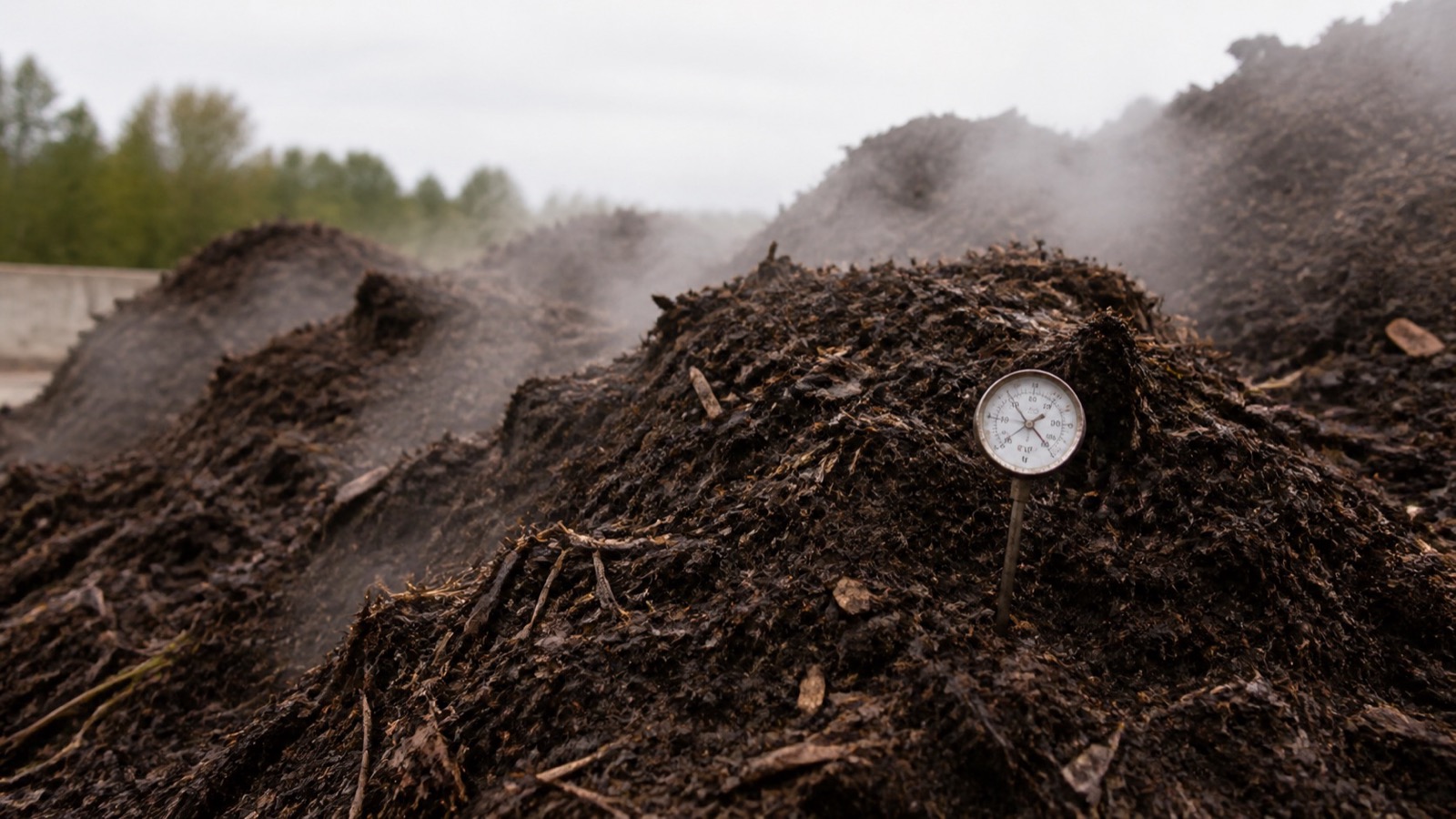
The requirements are non-negotiable
Volume. At least a cubic metre, built in one go. This is the part that stops most people. You need to stockpile material rather than adding it gradually.
Balance. Roughly equal browns and greens by volume, mixed rather than layered.
Moisture. Wrung-out sponge, throughout, at build time.
Turning. Every two to three days at first, moving the outside to the middle.
What happens
The pile should reach 55-65°C within 48 hours and hold there for a week or more, then cool as the easy food is consumed. Each turn briefly reheats it. When it stops reheating after turning, it moves to the slow maturation phase, another few weeks before use.
Why it is worth it
Speed, and sustained heat above 55°C kills most weed seeds and plant pathogens, which cold composting does not.
Related
The slower alternative: cold composting. If it will not heat: compost not heating up.
Further reading on hot composting
Independent sources worth reading alongside this page: EPA, Composting at Home · Cornell Waste Management Institute.