What is compost?
Compost is what is left when microbes have finished eating organic matter: a dark, crumbly, biologically alive material that improves soil structure. It is not soil, and it is not fertiliser, though it does a little of what both do. Below: the practical detail on what is compost, and what most guides leave out.
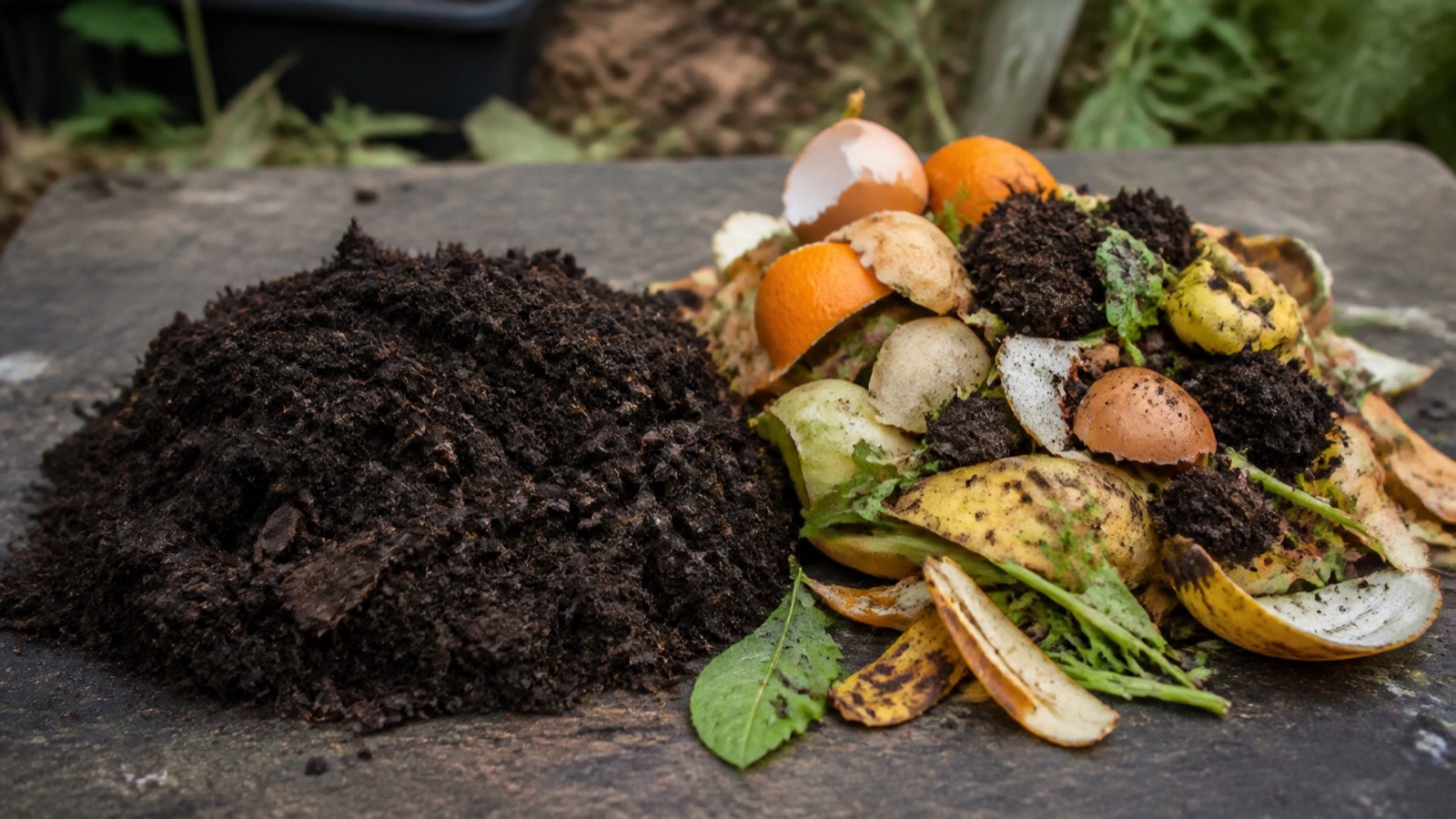
What separates it from the things it gets confused with
Soil is mostly mineral, weathered rock, with a few percent organic matter. Compost is almost entirely organic matter. Plants can grow in pure compost, badly; it holds too much water and slumps.
Mulch is anything spread on the surface to suppress weeds and hold moisture. Compost can be used as mulch. Bark chips cannot be used as compost.
Fertiliser delivers specific nutrients at known concentrations. Compost delivers modest amounts of many nutrients, slowly, plus something fertiliser cannot: structure and biology.
What it actually does for soil
The nutrient story is the least interesting part. Compost improves how soil holds together: clay drains better, sand holds water longer. It feeds the fungi and bacteria that make existing soil nutrients available to roots. Those effects compound over years.
Related
Why bother at all is covered in why compost. The biology is in how composting works. Or start at how to compost.
Further reading on what is compost
Independent sources worth reading alongside this page: Cornell Waste Management Institute · RHS, Composting.