Seasonal composting
A compost pile is not a machine that runs at one speed all year. It races in summer, stalls near freezing, and gets buried in material every autumn. Working with that rhythm is easier than fighting it. Below: how seasonal composting works in practice, what it demands of you, and who it actually suits.
Written for cold climates first. If you compost somewhere with real winters, most general advice quietly assumes you do not.
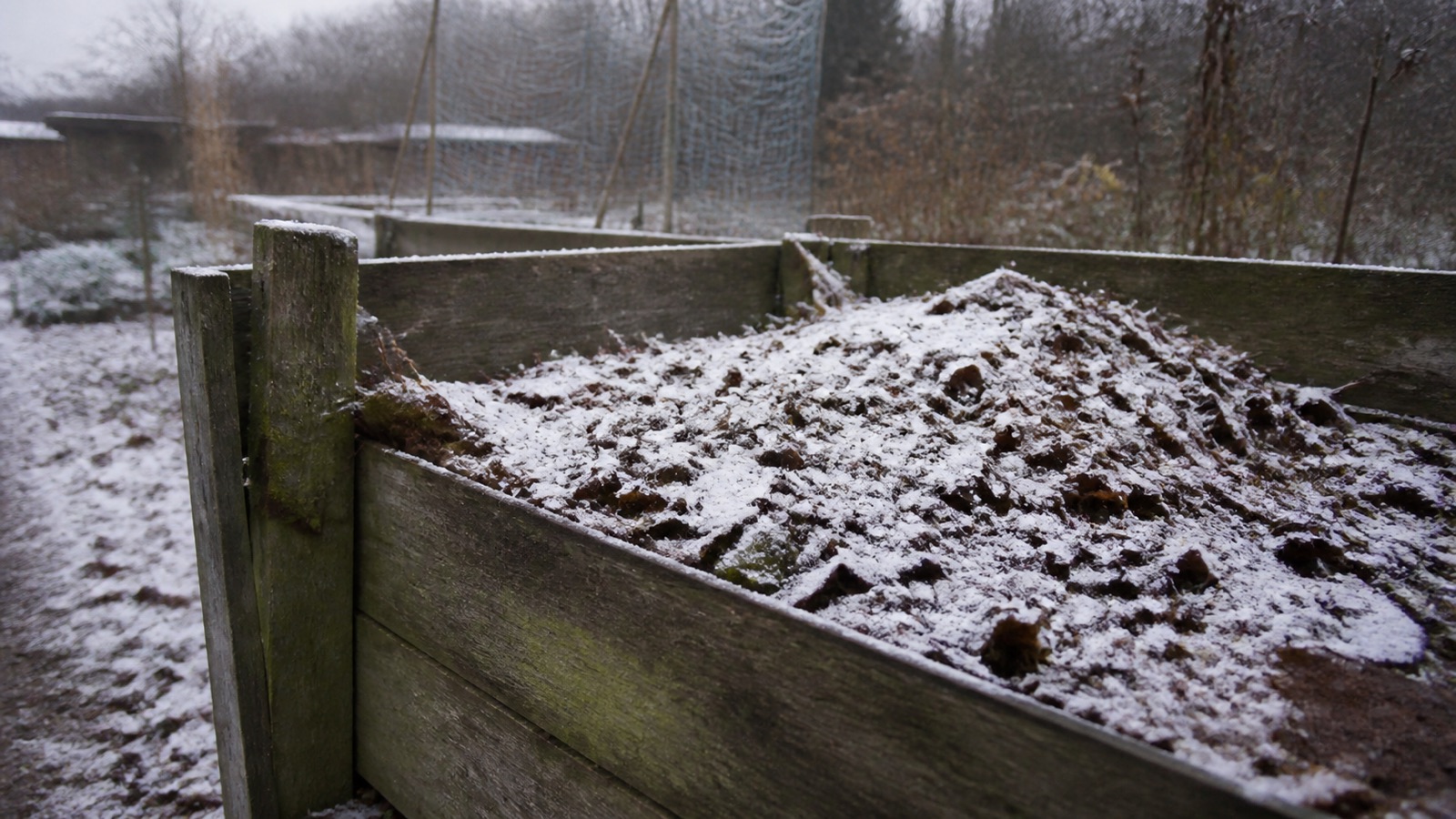
Start here
- Winter compostingWhat actually happens below freezing, and what is worth doing about it.
- Composting in Vermont wintersSnow load, frozen caddies, and keeping a pile going to March.
- Frozen compost pileIt is not dead. What to do and what to leave alone.
- Fall leaf compostingThe one time of year you have too many browns. Do not waste them.
- Spring compost preparationRestarting a pile that sat all winter.
- Summer maintenanceHeat, drying out, and fruit flies.
The year in one paragraph
Spring: turn what overwintered, add nitrogen, expect it to wake up within a fortnight. Summer: watch moisture, not temperature. Piles dry out faster than people expect. Autumn: collect and stockpile leaves, because they are the browns that will carry you through the next twelve months. Winter: stop turning, keep adding, accept that nothing much happens until March.
The autumn stockpile is the whole game
Almost every smelling, slimy, stalled pile belongs to someone with plenty of kitchen scraps and no dry material to mix in. Autumn hands you a year’s supply of browns for free. Bag the leaves, keep them dry, and you will not have that problem again.
Get the seasonal rhythm in one place
Composting 101 covers the whole year. What to do in each season, plus a section on composting in your specific climate. Free, 14 pages, no strings.
Further reading on seasonal composting
Independent sources worth reading alongside this page: EPA, Composting at Home · Cornell Waste Management Institute.