Composting by climate
The biology of composting is identical everywhere. What changes is which variable fights you: cold in Vermont, evaporation in Arizona, drainage in Seattle, and sheer speed in Florida. Find your climate and the general advice becomes specific. Below: the practical detail on composting by climate, and what most guides leave out.
Most composting guides are written from somewhere and quietly assume you live there too. Advice about keeping a pile from freezing is useless in Phoenix; advice about shade and moisture retention is beside the point in Vermont in January.
Find your climate
- Cold climateZones 3-5. Long freezes, short seasons, piles that pause for months.
- Hot and humid SouthZones 8-10. Everything rots fast, and everything smells faster.
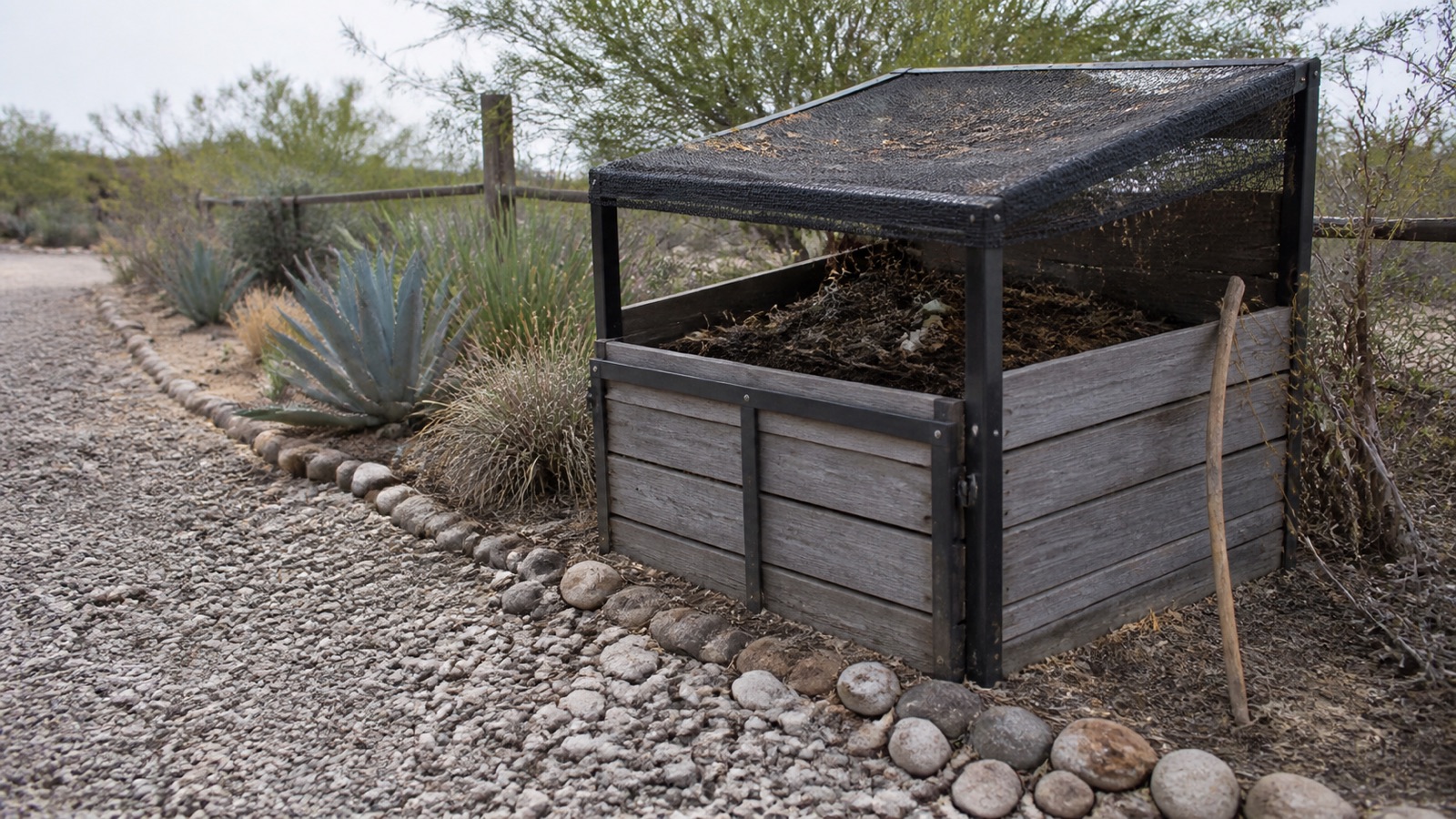
- Arid SouthwestZones 8-10 dry. The pile’s enemy is evaporation, not cold.
- Pacific NorthwestMild, wet, and prone to drowning a pile in winter rain.
- MidwestReal winters, hot summers, and wind that dries a pile out.
- High altitudeThin air, cold nights, intense sun, and slow everything.
What actually changes by region
Temperature sets the speed. Near freezing, decomposition effectively pauses; at 30°C ambient it races.
Rainfall decides whether your problem is a sodden pile or a desiccated one. Those need opposite fixes, which is why generic advice frustrates people.
Humidity changes how fast a pile dries between waterings, and how quickly exposed food waste starts to smell.
Season length determines whether you get one batch a year or four.
One guide, tuned to where you live
Composting 101 ends with a section on composting in your own climate. The variable that fights you, and what to do differently about it. Free, 14 pages.
Further reading on composting by climate
Independent sources worth reading alongside this page: USDA Plant Hardiness Zone Map · Cornell Waste Management Institute.