Composting in the desert Southwest
In Arizona, Nevada, New Mexico and inland California the enemy is evaporation. A pile that would be perfect in Ohio will be bone dry in a fortnight here, and a dry pile is as inactive as a frozen one. Below: how desert composting works in practice, what it demands of you, and who it actually suits.
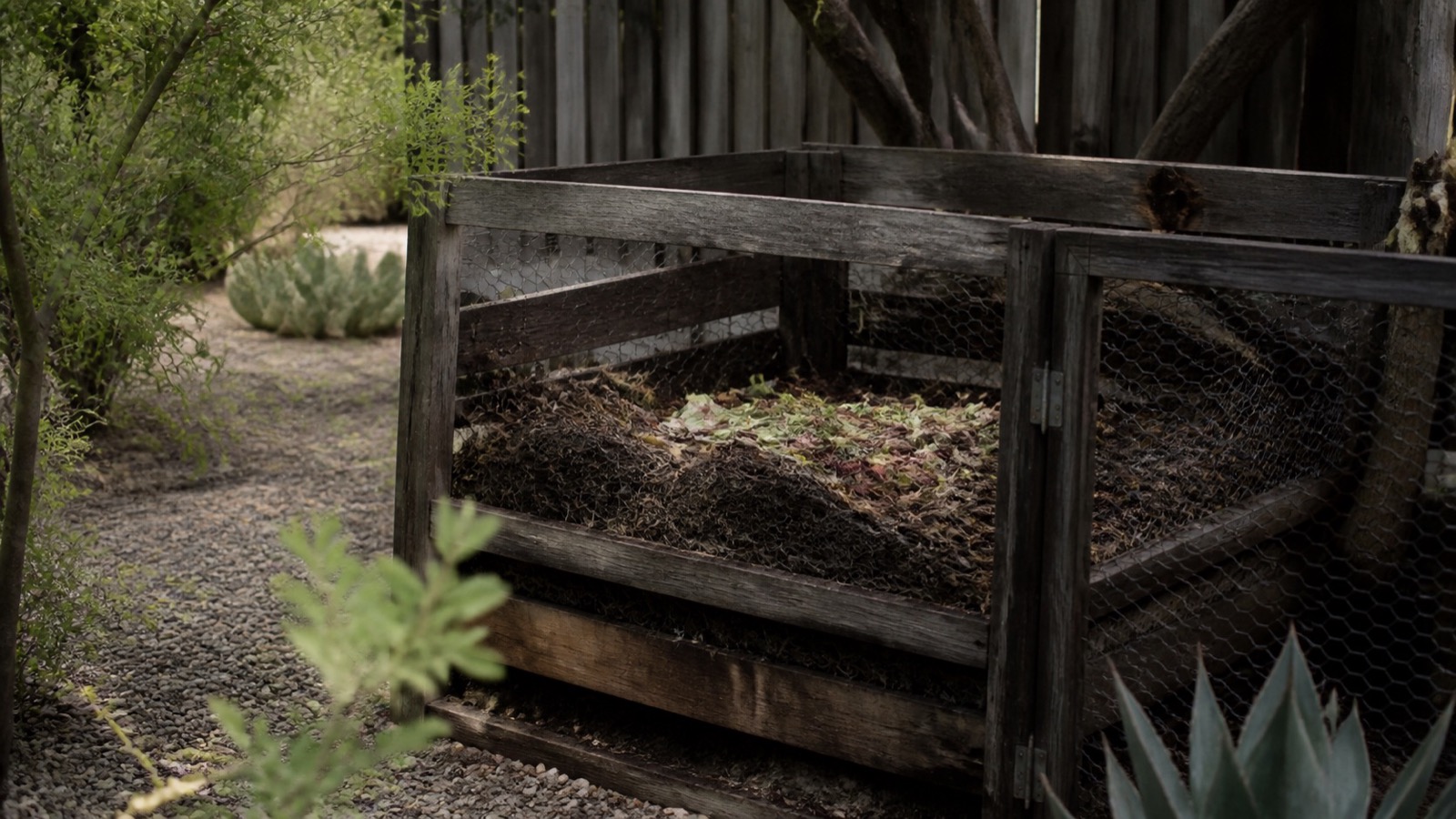
The constraint: water leaves faster than you add it
Low humidity, intense sun and wind strip moisture continuously. Most failed desert piles are not unbalanced. They are simply dehydrated.
What works
Site it in shade. Full sun is not survivable for a pile here. North side of a building, under a tree, or under shade cloth.
Enclose it. A contained bin loses far less moisture than an open heap. Some desert composters use a lidded bin specifically to trap humidity.
Water it deliberately, as a scheduled task, mixing as you go rather than pouring on top.
Go deeper, not wider. Less surface area exposed to drying air.
Pit and trench methods shine here
Below-ground composting is dramatically more moisture-stable in an arid climate, and it is the traditional approach in dry regions for exactly that reason. See trench composting.
Related
Dry piles: compost too dry. Method: trench composting. Hub: composting by climate.
Further reading on desert composting
Independent sources worth reading alongside this page: EPA, Composting at Home · Cornell Waste Management Institute.