Browns and greens
Browns are dry and carbon-rich: leaves, cardboard, straw. Greens are wet and nitrogen-rich: food scraps, grass, coffee grounds. Aim for roughly equal volumes of each and most compost problems never happen. Below: the practical detail on browns and greens, and what most guides leave out.
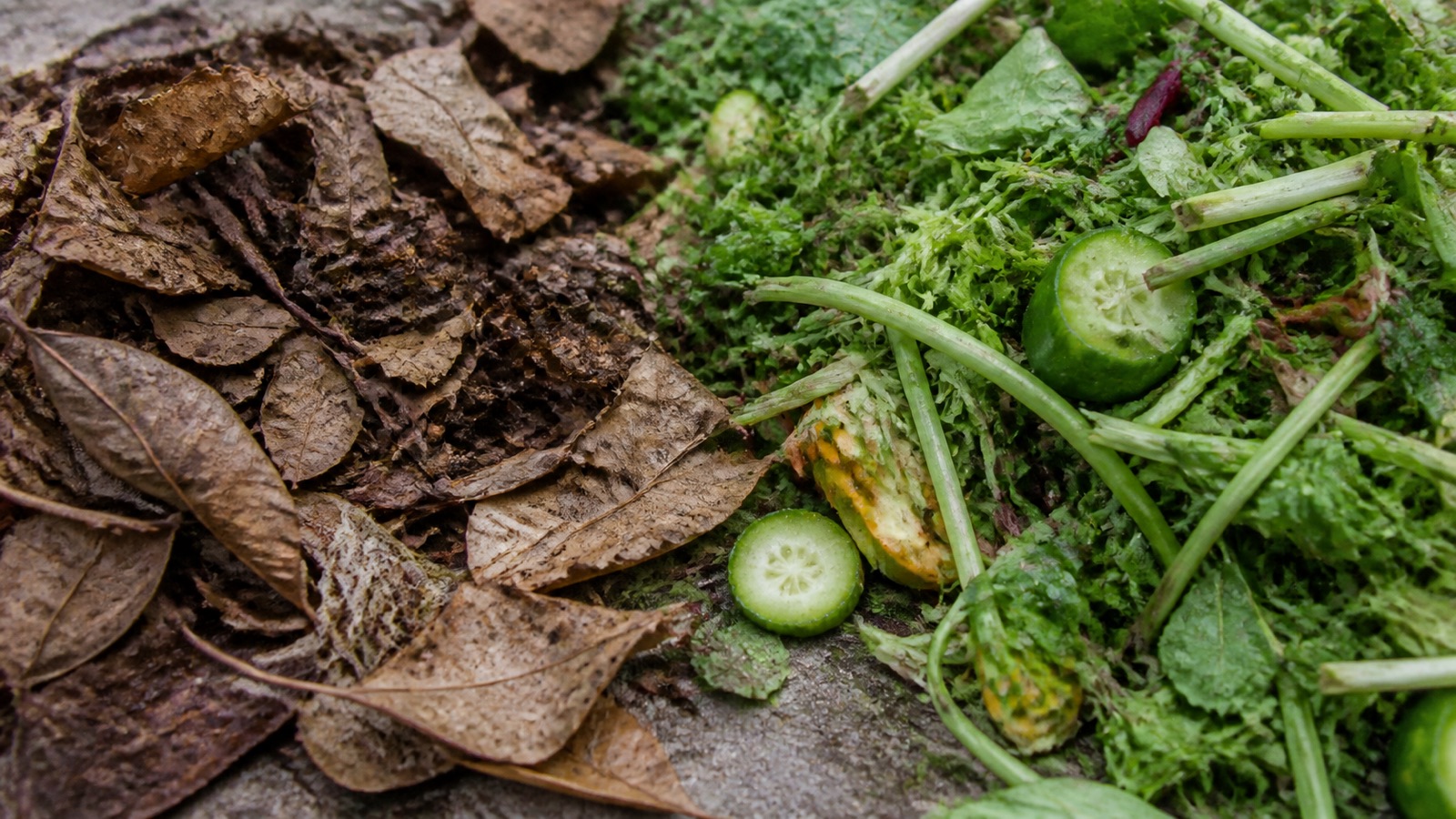
Which is which
Browns: dry leaves, shredded cardboard, paper, straw, woody prunings, sawdust from untreated wood, egg boxes.
Greens: fruit and vegetable scraps, grass clippings, coffee grounds, tea leaves, fresh plant material, manure from herbivores.
Colour is a memory aid, not a rule, and it misleads constantly. Coffee grounds are brown and behave as a green. Fresh green prunings are a green; the same prunings dried for a month are a brown.
The test that actually works
Is it wet and soft, and would it rot on its own in a bag within a week? Green. Is it dry and structural, and would it sit unchanged in a bag for a year? Brown.
What the ratio really means
Roughly equal parts by volume. You will read “30:1”. That is a carbon-to-nitrogen ratio by weight, which is a laboratory measure, not something you can eyeball. See carbon-to-nitrogen ratio if you want the detail.
Reading the pile
Smells sour, looks slimy, matted: too many greens. Add browns and turn.
Dry, nothing happening, looks the same as last month: too many browns. Add greens and water.
Related
Materials one by one: what can you compost. Symptoms: compost problems. Hub: how to compost.
Further reading on browns and greens
Independent sources worth reading alongside this page: EPA, Composting at Home · Cornell Waste Management Institute.