Trench composting
Dig a trench 30cm deep, fill it with food scraps, cover it with soil. That is the entire method. No bin, no turning, no smell, no rats, and nothing to learn. Below: how trench composting works in practice, what it demands of you, and who it actually suits.
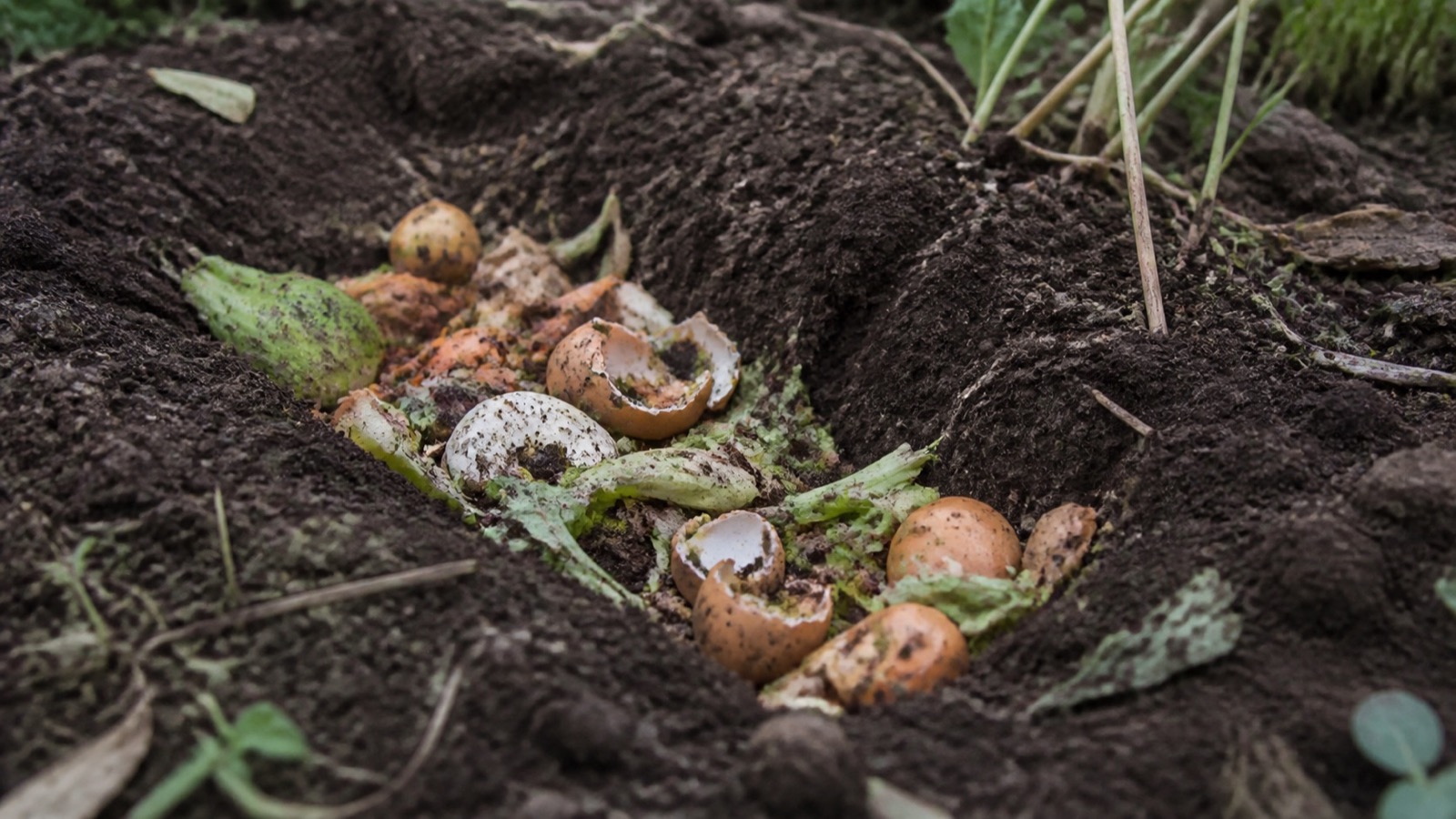
How to do it
Dig a trench or hole about 30cm deep in a bed you are not currently cropping. Add scraps to a depth of 15cm or so, backfill with the excavated soil, and leave it. Material breaks down in place over a few months.
Why it works so well
Soil organisms do the work directly. Burial depth eliminates smell and denies access to scavengers. Nothing is exposed, so nothing needs managing.
Rotation
The classic approach runs a three-year cycle across a bed: trench one strip this year, plant into it the next, path the year after. Hungry crops, beans, squash, courgettes, do noticeably well over a filled trench.
Limits
You need bare soil and a spade, so it is no use on a balcony or in frozen ground. It handles a household’s scraps but not bulk garden waste. And you cannot harvest the compost, it feeds that spot and nowhere else.
Related
All methods: types of composting. Using compost elsewhere: using your compost.
Further reading on trench composting
Independent sources worth reading alongside this page: EPA, Composting at Home · Cornell Waste Management Institute.