Composting in the Midwest
The Midwest gives you both problems in one year: piles that freeze solid in January and dry out in an August wind. The answer is a pile built for the extremes rather than the average. Below: how Midwest composting works in practice, what it demands of you, and who it actually suits.
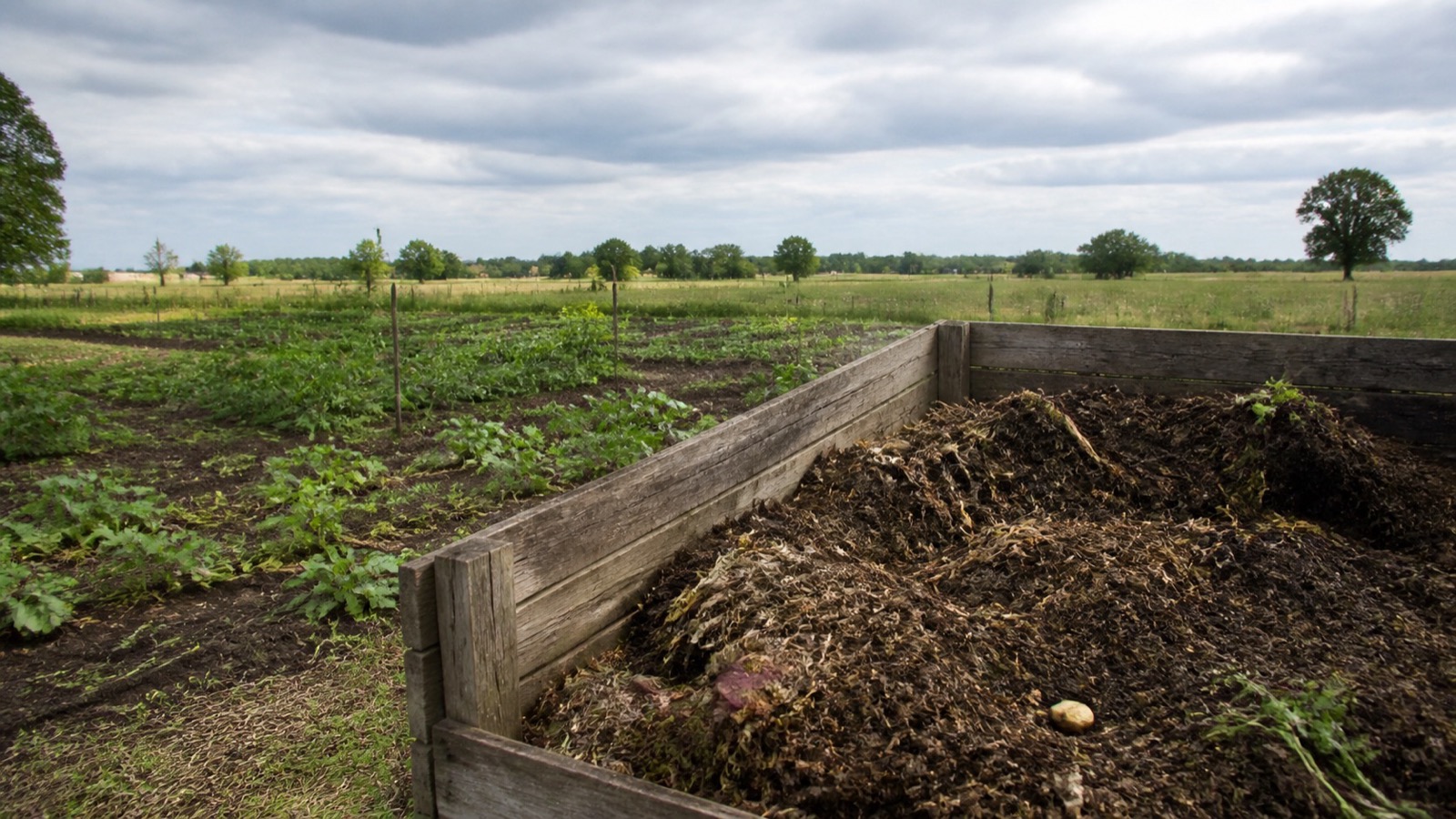
The constraint: two opposite seasons
Continental climate means a wide annual swing. A setup tuned for summer will fail in winter and the reverse.
What works
Build volume. Mass buffers both extremes. It holds heat in winter and moisture in summer.
Site it out of the wind. Prairie wind dries a pile remarkably fast; a fence or hedge on the windward side makes a measurable difference.
Bank leaves in autumn. The Midwest produces them in quantity and they carry you through the year.
Expect a winter pause in the northern half, and a shorter one further south.
Summer management
Check moisture weekly from June to September. Grass clippings arrive in volume: mix them through browns rather than layering, or they mat and sour in the heat.
Related
Seasonal detail: seasonal composting. Hub: composting by climate.
Further reading on Midwest composting
Independent sources worth reading alongside this page: EPA, Composting at Home · Cornell Waste Management Institute.