Composting at high altitude
Above roughly 6,000 feet everything slows. Cold nights persist into summer, the growing season is short, the air is thin and dry, and UV is punishing. Piles here need to be bigger, wetter and more sheltered than the same pile at sea level. Below: how high altitude composting works in practice, what it demands of you, and who it actually suits.
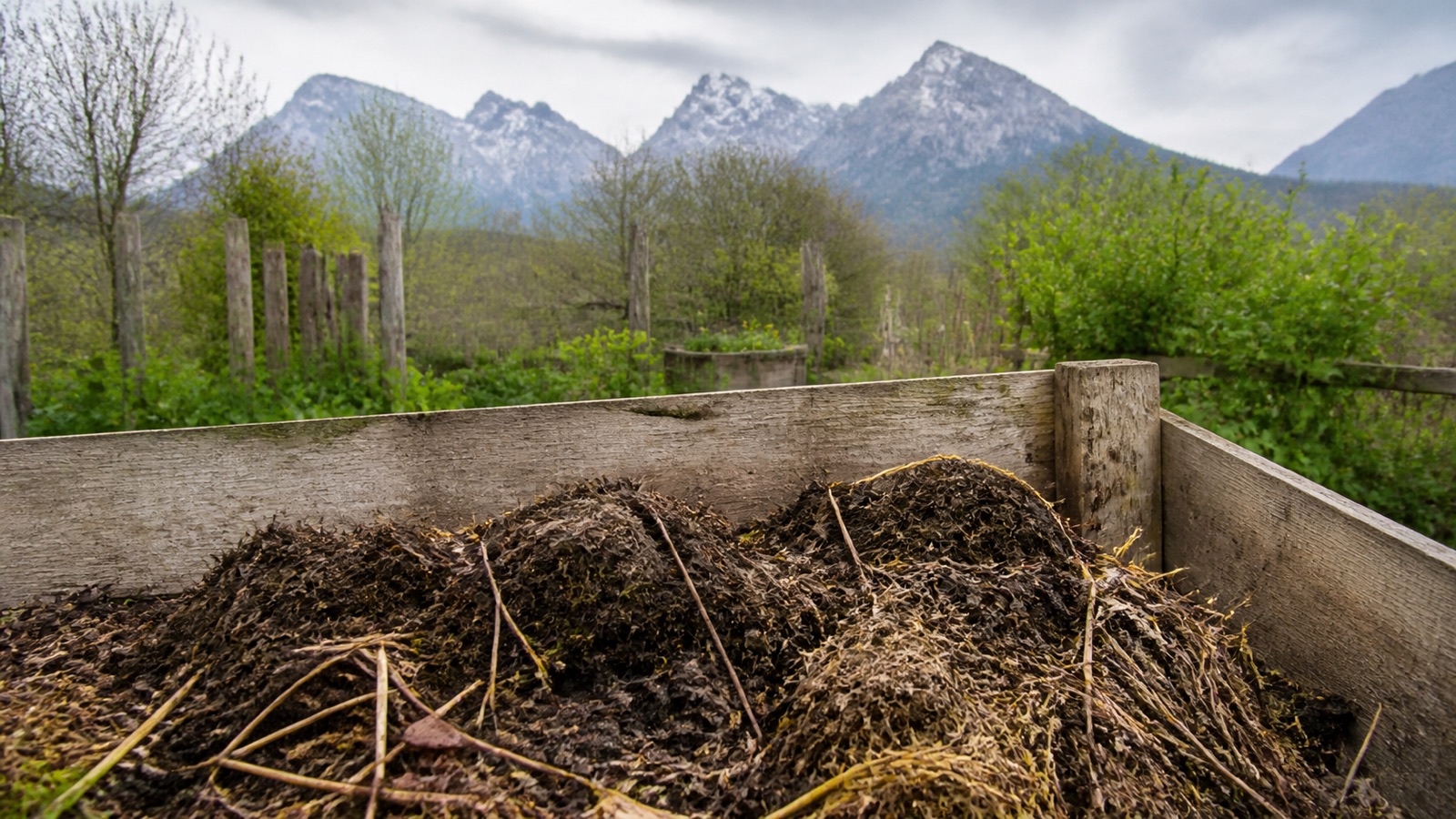
The constraints stack
Low ambient temperature slows microbes. Low humidity and intense sun dry the pile. Thin air means less oxygen per volume. Freeze-thaw happens nightly for much of the year.
What works
Size up. Mass is the main defence against cold nights. A small pile at altitude never gets going.
Insulate and enclose. Straw bales around a bin work well and are usually available locally.
Water more than seems necessary, and check the middle rather than the surface.
Use the sun. A south-facing site with wind shelter gains real hours of activity.
Expect it to take longer
A year is normal at altitude for material that would finish in six months lower down. That is the climate, not a fault in your method.
Related
Cold conditions: cold climate composting. Hub: composting by climate.
Further reading on high altitude composting
Independent sources worth reading alongside this page: EPA, Composting at Home · Cornell Waste Management Institute.