Fall leaf composting
Autumn is the one time of year you have more browns than you can use. Bagging leaves now is the single highest-value thing you can do for next year’s compost, because a shortage of dry material causes most compost problems. Below: how fall leaf composting works in practice, what it demands of you, and who it actually suits.
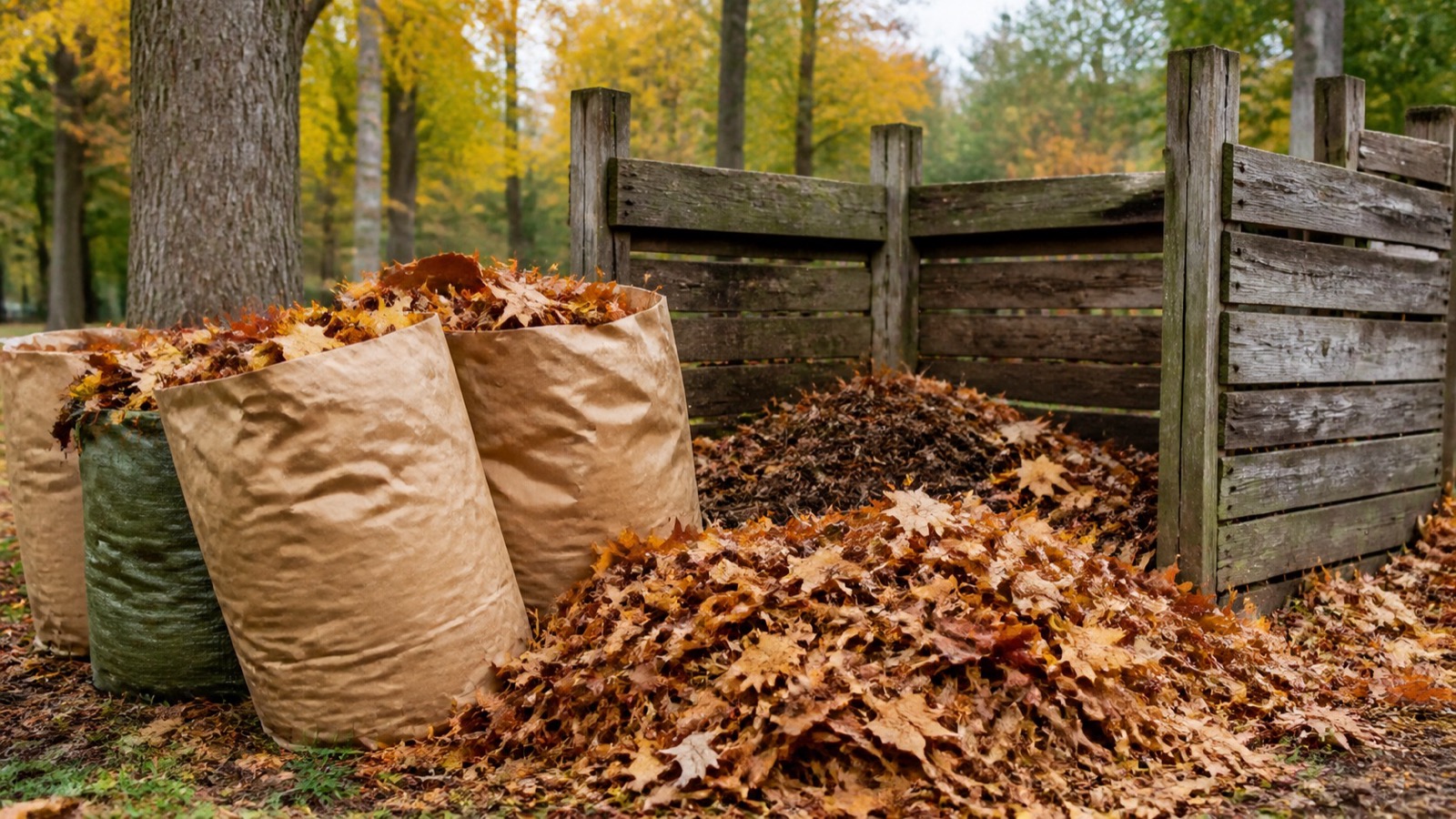
Why stockpiling matters so much
Through the rest of the year, most households produce a steady stream of wet greens and almost no browns. That imbalance is the root cause of sour, slimy, stalled piles. Autumn hands you a year’s supply of the missing ingredient, free.
How to store them
Keep them dry. Wet stored leaves mat and turn to sludge. Bags under cover, a wire cage with a lid, or a covered pile all work.
Shred first if you can. Mowing over a windrow takes minutes and dramatically speeds later breakdown.
Two piles, two purposes
Split the haul. Some leaves go into storage as browns for the compost bin; the rest go into a separate cage to become leaf mold, which needs no management at all.
Related
Leaves as a material: can you compost leaves. Hub: seasonal composting.
Further reading on fall leaf composting
Independent sources worth reading alongside this page: EPA, Composting at Home · Cornell Waste Management Institute.