Why compost?
Because it turns a waste stream you are already producing into the single best thing you can add to garden soil, for free. The landfill-methane argument is real but oversold for individuals; the soil argument is the one that holds up. Below: the practical detail on why compost, and what most guides leave out.
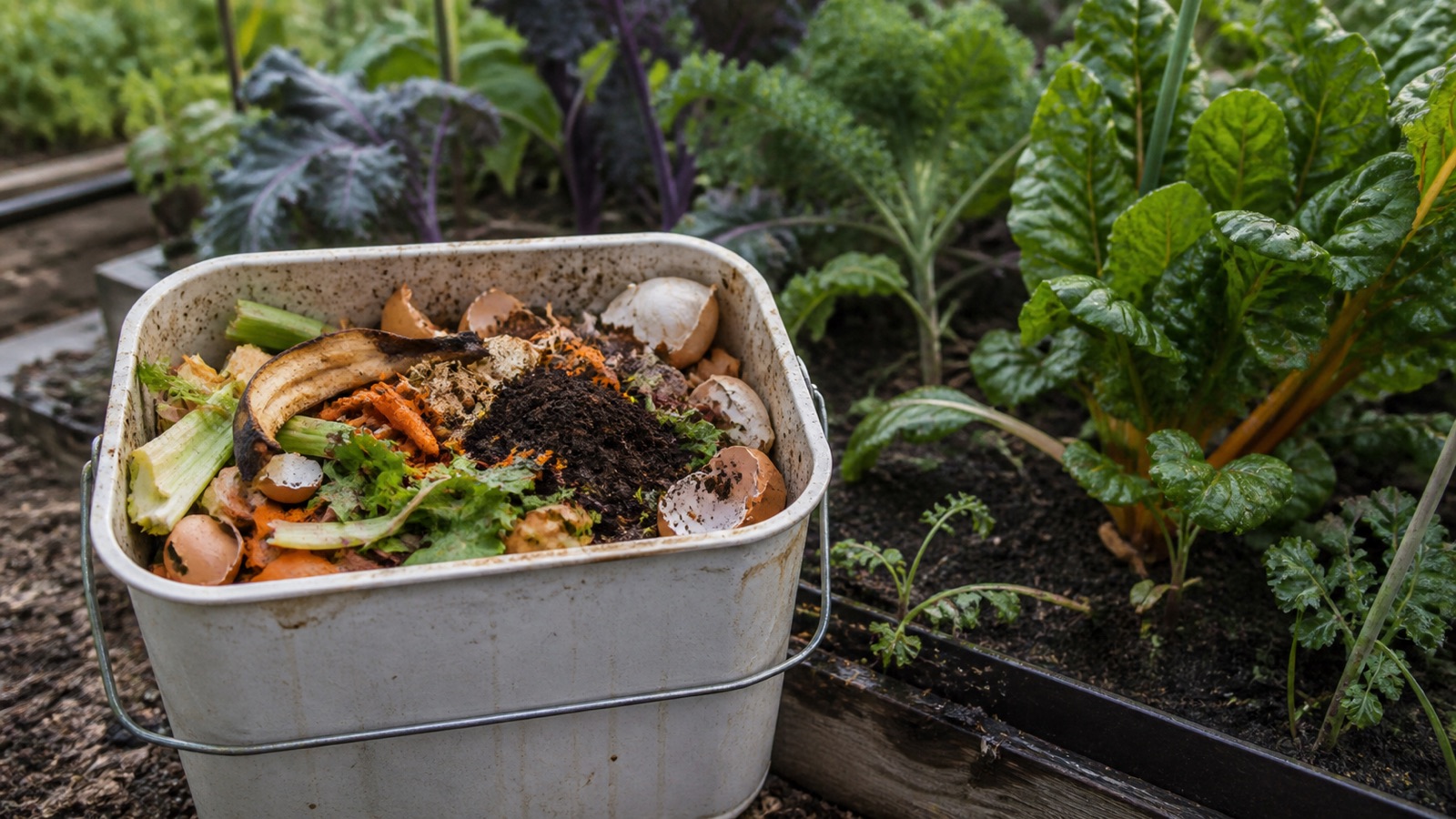
The case that is genuinely strong
It is the cheapest soil improvement available. Bagged soil conditioner costs real money. Your kitchen and garden produce the raw material continuously, whether or not you use it.
Food waste in landfill decomposes anaerobically, producing methane. Composting it aerobically produces mostly CO2 and water instead. This is true and worth doing.
It closes a loop you can see. Genuinely satisfying in a way that is hard to argue people out of.
The case that gets overstated
Individual composting is often framed as a significant personal climate action. Household food waste is a real emissions source, but the arithmetic on one domestic pile is modest. Composting is worth doing on its merits; it does not need inflating.
You will also see claims that compost “sequesters carbon”. Some carbon does stay in soil as stable organic matter, but most of what you add is respired back to the atmosphere within a few years. The soil-structure benefit is the durable one.
Related
What compost actually is: what is compost. Ready to start? how to compost.
Further reading on why compost
Independent sources worth reading alongside this page: EPA, Composting at Home · Cornell Waste Management Institute.