Tumbler composting
A tumbler makes turning easy and keeps rodents out. It also holds less than it appears, gets very heavy when full, and will go waterlogged if it has no drainage. Worth it for specific problems, oversold as a general solution. Below: how compost tumbler works in practice, what it demands of you, and who it actually suits.
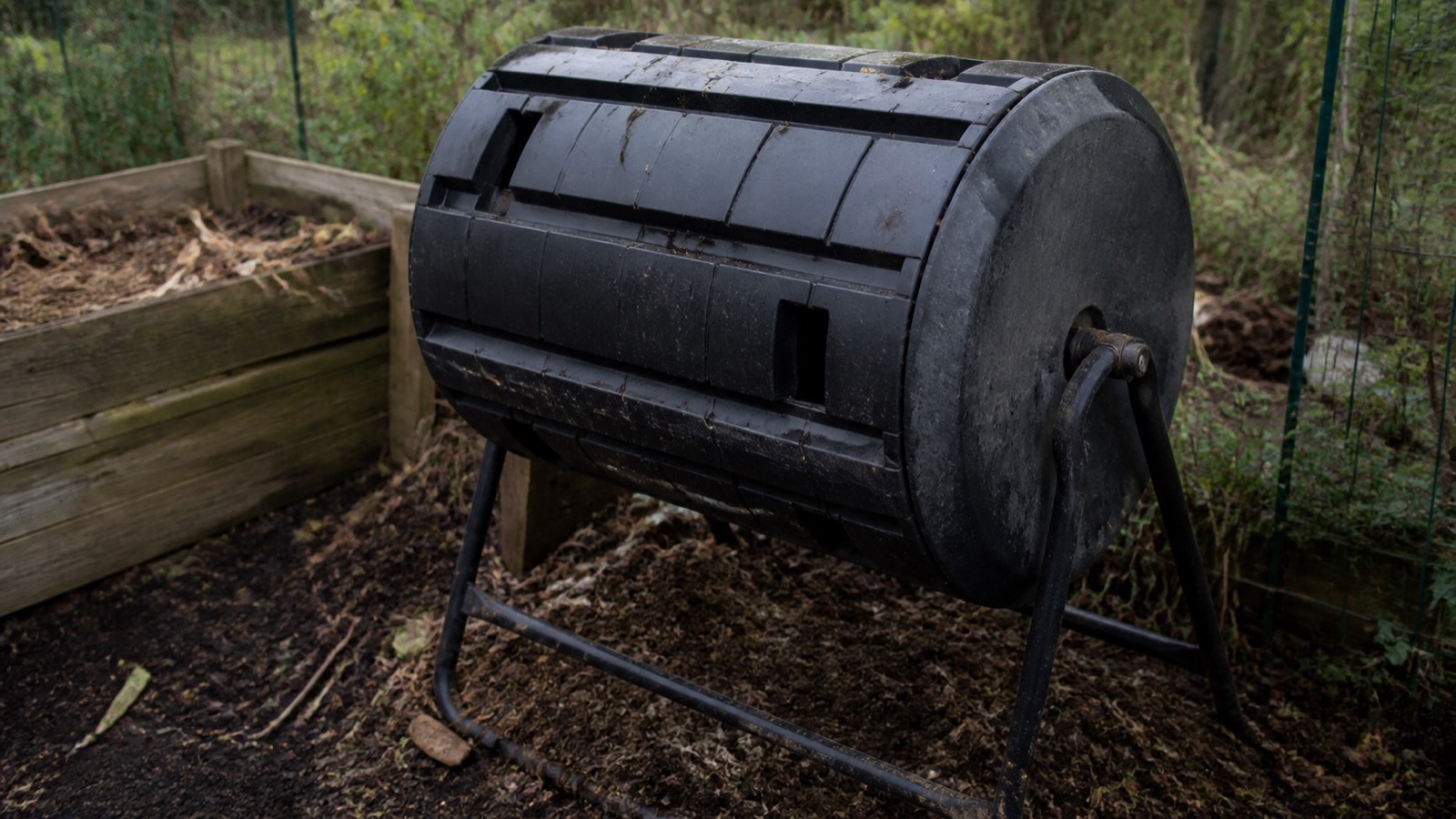
What it genuinely solves
Rodents. Off the ground and sealed, a tumbler is the most rat-resistant option available. If you have an established rat problem this alone can justify it.
Turning. A crank handle beats a fork, particularly for anyone who cannot easily dig.
Tidiness. Contained and unobjectionable in a small garden.
What it does not solve
Capacity. A typical tumbler holds far less usable volume than a heap, and small volumes struggle to hold heat, so the ‘compost in 14 days’ claim rarely survives contact with reality.
Drainage. Sealed drums with no holes turn into sour soup. Drill them.
Weight. A full drum of wet material is genuinely hard to rotate.
Continuous feeding. Adding fresh material restarts the batch. Dual chambers are marketed as the fix and mostly deliver two undersized bins.
Related
Choosing between them: how to choose a compost bin. All methods: types of composting.
Further reading on compost tumbler
Independent sources worth reading alongside this page: EPA, Composting at Home · Cornell Waste Management Institute.