Using your compost
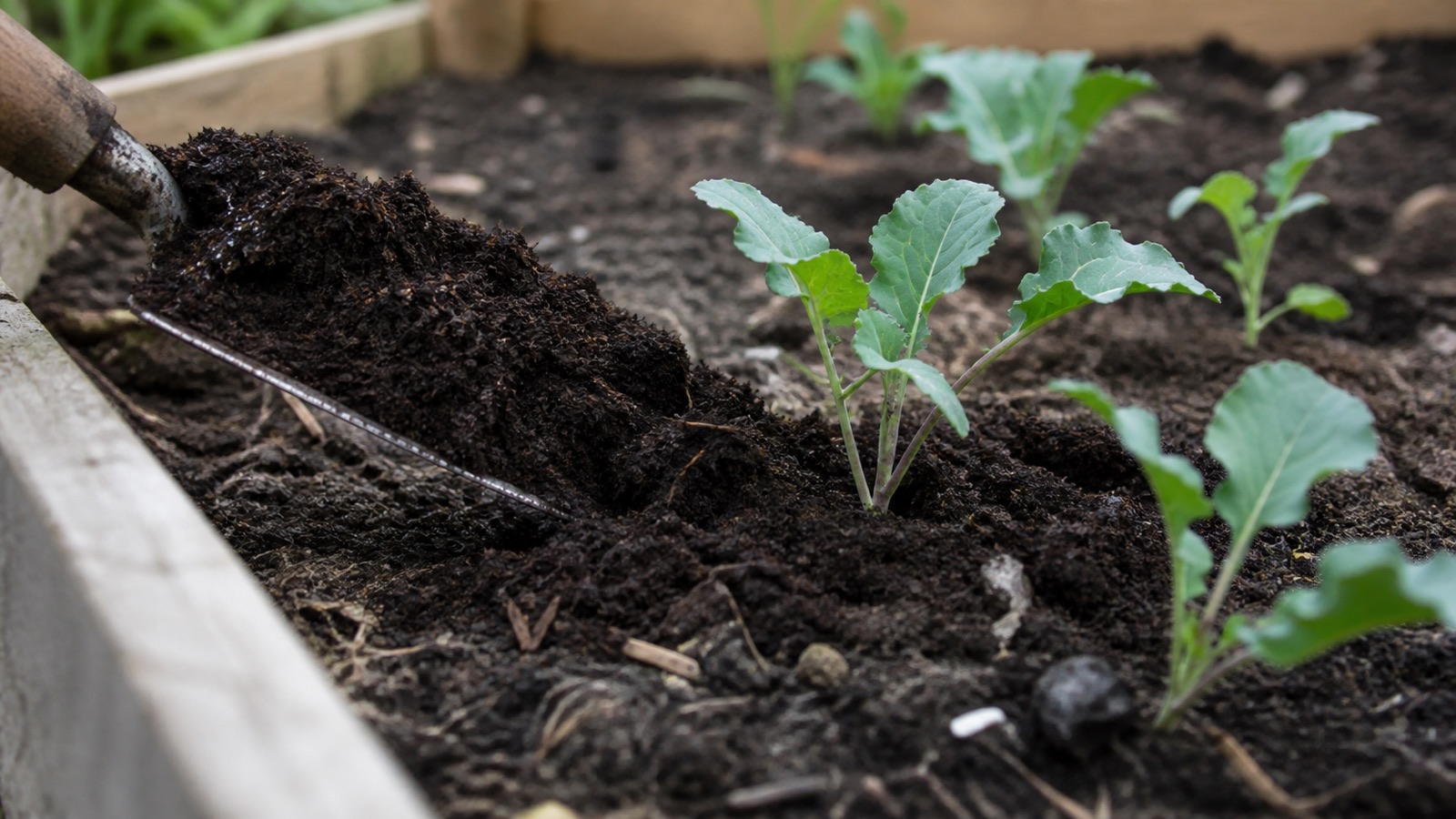
For most uses, 2-5cm spread on the surface once a year is plenty. Compost is a soil conditioner first and a fertiliser second. The common mistake is treating it as potting soil. Below: the practical detail on how to use compost, and what most guides leave out.
You made the stuff. Now the questions are how much, how often, and whether it is even finished. All three below.
Start here
- Vegetable gardensHow much, when, and why you do not need to dig it in.
- Raised bedsTopping up, and why beds sink every year.
- LawnsTop-dressing without smothering the grass.
- HouseplantsThe one place neat compost is usually a mistake.
- Trees and shrubsMulch rings, and keeping it off the trunk.
- Flower bedsPerennials, annuals and when to apply.
- Improving soilThe long game. What compost does to structure over years.
- Using unfinished compostWhen it is fine and when it will cost you a crop.
Is it actually finished?
Finished compost is dark, crumbly, smells of forest floor, and you cannot identify what went in: with the honourable exception of eggshells and avocado stones, which outlive everything.
If you can still recognise material, it is not finished. That is not a disaster, but immature compost temporarily locks up nitrogen as it continues to break down, which is exactly the nutrient your seedlings want.
How much
Vegetable beds: 2-5cm a year, spread on top. Worms will take it down.
Lawns: 5-10mm, screened, brushed in. More than that smothers grass.
Trees: a 5cm mulch ring out to the drip line, kept clear of the trunk.
Containers: no more than a third by volume, mixed with potting medium.
Application rates, on one page
Composting 101 includes how much compost to use where, beds, lawns, trees, containers, and how to tell whether yours is actually finished. Free PDF.
Further reading on how to use compost
Independent sources worth reading alongside this page: EPA, Composting at Home · Cornell Waste Management Institute.