Compost for trees and shrubs
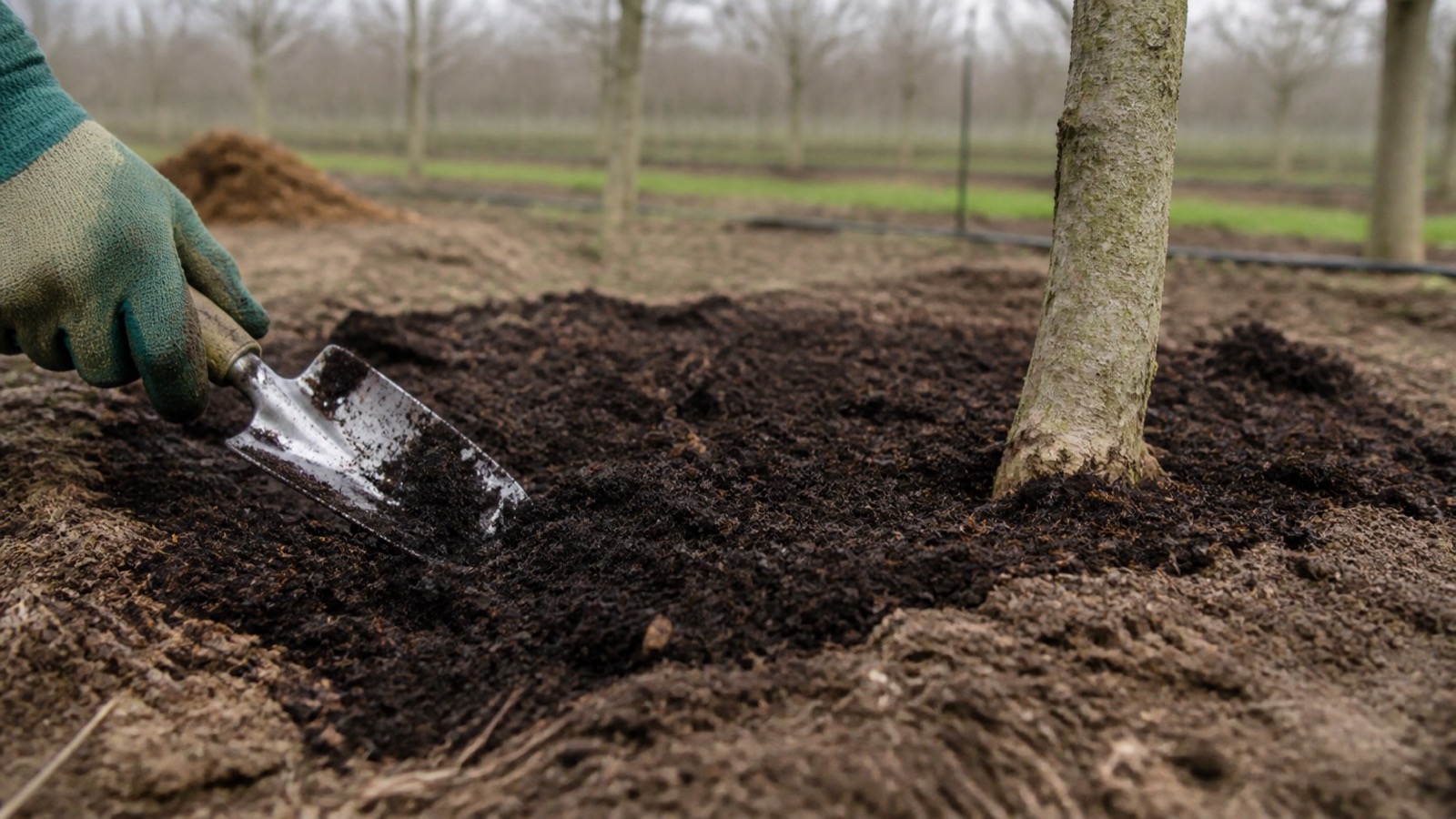
A 5cm mulch ring out towards the drip line, kept well clear of the trunk. The most common mistake is piling it against the bark, which rots the collar and can eventually kill the tree. Below: how much compost for trees to use, when to apply it, and where it does more harm than good.
Where the roots actually are
Feeder roots extend to and beyond the canopy edge, mostly in the top 30cm of soil. Compost applied in a narrow circle at the trunk misses nearly all of them.
Method
Spread 3-5cm from about 15cm away from the trunk outwards, as far towards the drip line as you can manage. Do not dig it in. Tree roots are shallow and easily damaged.
The volcano problem
Mulch heaped against a trunk holds moisture against bark that is not adapted to it, causing collar rot and encouraging roots to circle. It is endemic in landscaping and it kills trees slowly.
Related
Rates for other uses: using your compost.
Further reading on compost for trees
Independent sources worth reading alongside this page: University of Georgia Extension, Composting · EPA, Composting at Home.