Compost for vegetable gardens
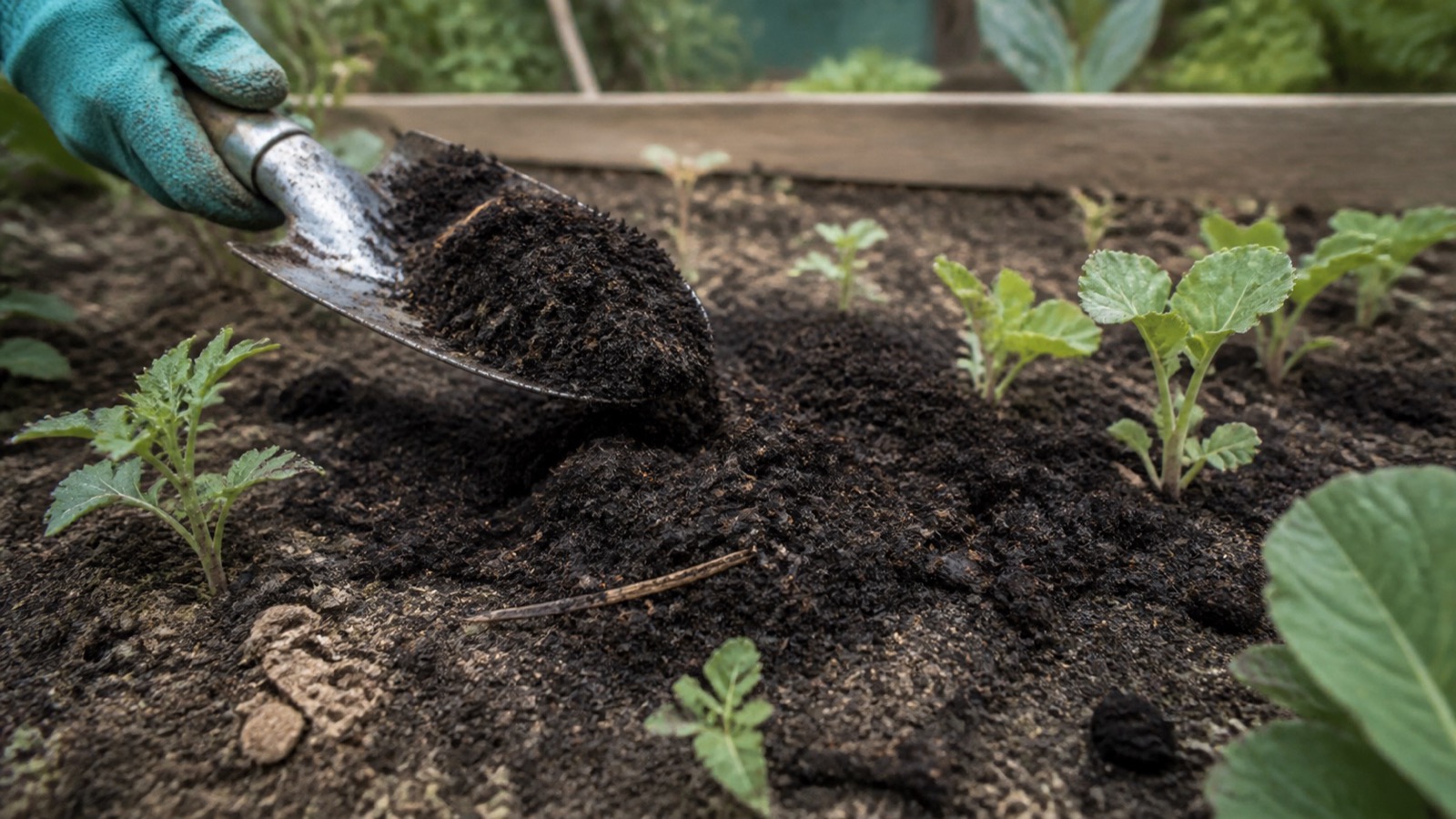
Spread 2-5cm over the surface once a year and leave it there. You do not need to dig it in. Worms will do that, and digging damages the soil structure compost is meant to build. Below: how much compost for vegetable gardens to use, when to apply it, and where it does more harm than good.
When to apply
Autumn or early spring, before planting. Autumn gives it a winter to integrate; spring is fine if autumn slipped past.
Why not dig it in
Digging breaks up fungal networks and the aggregate structure that gives soil its texture. Surface application feeds soil life from the top down, which is how it works in an undisturbed system. Worms move it down within weeks.
Hungry crops
Squash, courgettes, brassicas and sweetcorn respond well to extra. A planting hole part-filled with compost is a reasonable exception to the no-digging principle.
Crops that prefer less
Root vegetables, carrots and parsnips especially, fork and branch in freshly enriched soil. Grow them in a bed that was composted the previous year.
Related
Is yours finished? See using your compost. Or using unfinished compost.
Further reading on compost for vegetable gardens
Independent sources worth reading alongside this page: University of Georgia Extension, Composting · EPA, Composting at Home.