Vermont farmers markets
Beyond produce, markets are a practical route to local compost, manure, seedlings and, most usefully, growers who know what actually performs in your specific valley. Below: the practical detail on Vermont farmers markets, and what most guides leave out.
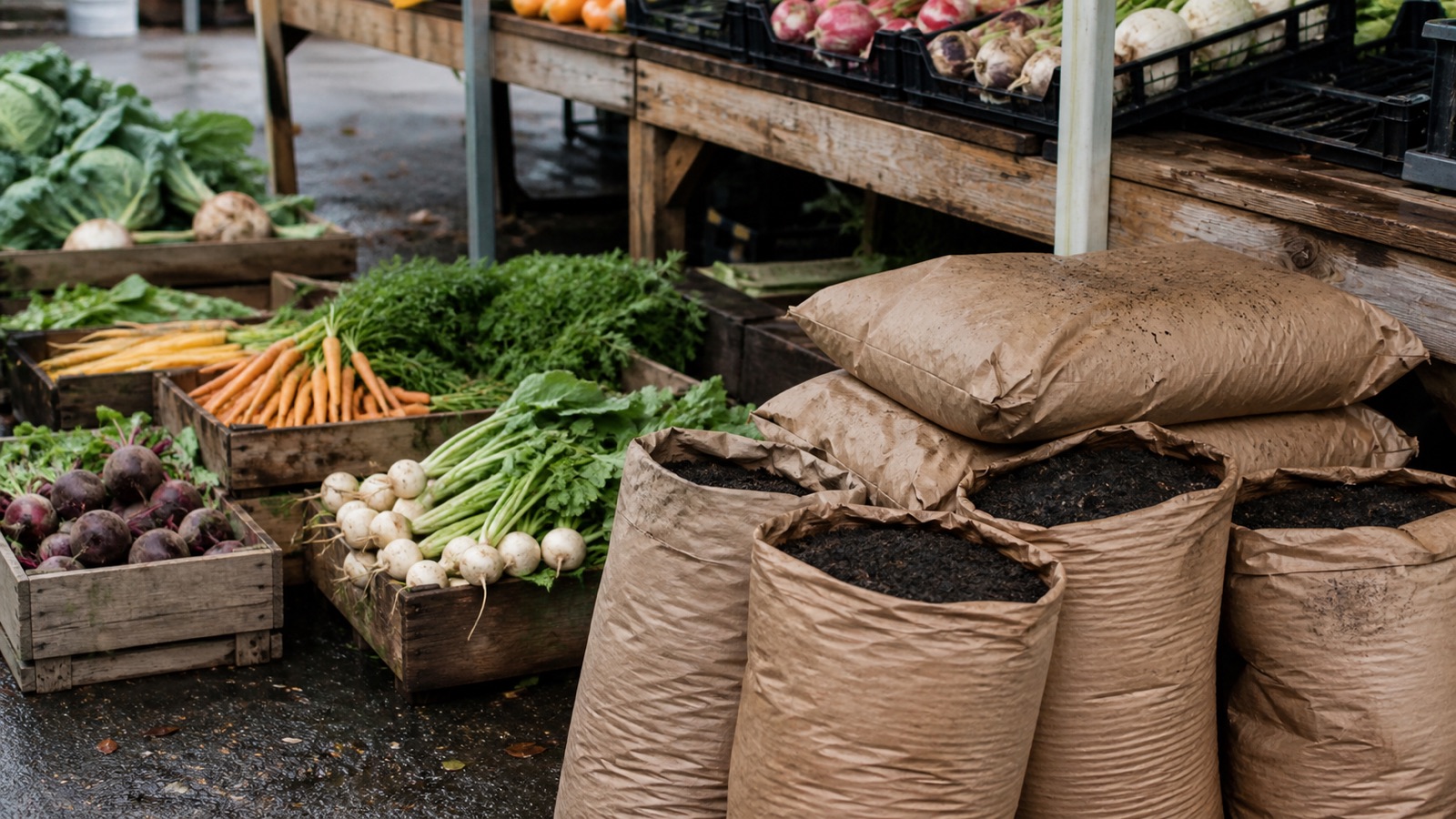
Why they are useful to a composter
Compost and manure. Several producers sell direct at market, often in bulk by arrangement.
Seedlings suited to the region. Varieties that reliably finish in a short season.
Local knowledge. A grower two valleys over knows your frost pockets and soil far better than any general guide.
Questions worth asking about compost
What is the feedstock, how long has it cured, and do they test for persistent herbicides. Anyone selling seriously will have answers.
Finding markets
The Vermont Agency of Agriculture and NOFA-VT both maintain current market directories, including winter markets. Those listings stay current in a way a static page would not.
Buying compost and manure at market
Several Vermont growers and small producers sell finished compost, aged manure and worm castings directly at market, often in bags with bulk delivery available by arrangement. Buying face to face has a specific advantage: you can ask what went into it and get a real answer, which is rarely possible with a bagged product from a garden centre.
The questions worth asking are the same ones on our suppliers page: what is the feedstock, how long has it cured, and do they know whether the hay or manure in it came from ground treated with aminopyralid or clopyralid. A producer who understands that question immediately is a producer worth buying from.
Seedlings suited to a short season
Market growers sell varieties they themselves rely on, in a climate with 90 to 150 frost-free days. That is a more useful filter than a seed catalogue description written for a national audience. Ask what finishes reliably in your specific valley. Elevation and aspect change the answer within a few miles.
Winter markets
Vermont has a genuine winter market culture, and for a gardener they are arguably more useful than summer markets: growers have time to talk, and storage crops on the table tell you exactly which varieties hold well through a Vermont winter.
Finding current markets
The Vermont Agency of Agriculture, Food and Markets and NOFA-VT both publish current market directories with locations, dates and seasons. Those listings are maintained and change year to year, which is why we point you at them rather than reproducing a list here that would quietly go stale.
Related
Judging what you buy: is bulk compost safe to use. Hub: Vermont resources.
Further reading on Vermont farmers markets
Independent sources worth reading alongside this page: Vermont Dept. of Environmental Conservation · EPA, Sustainable Management of Food.