Is bulk compost safe to use?
Usually yes, but smell it and test it before spreading it across a bed. The two real risks in bought compost are immaturity and persistent herbicide contamination, and the second one can wreck a growing season. Below: the practical detail on bulk compost, and what most guides leave out.
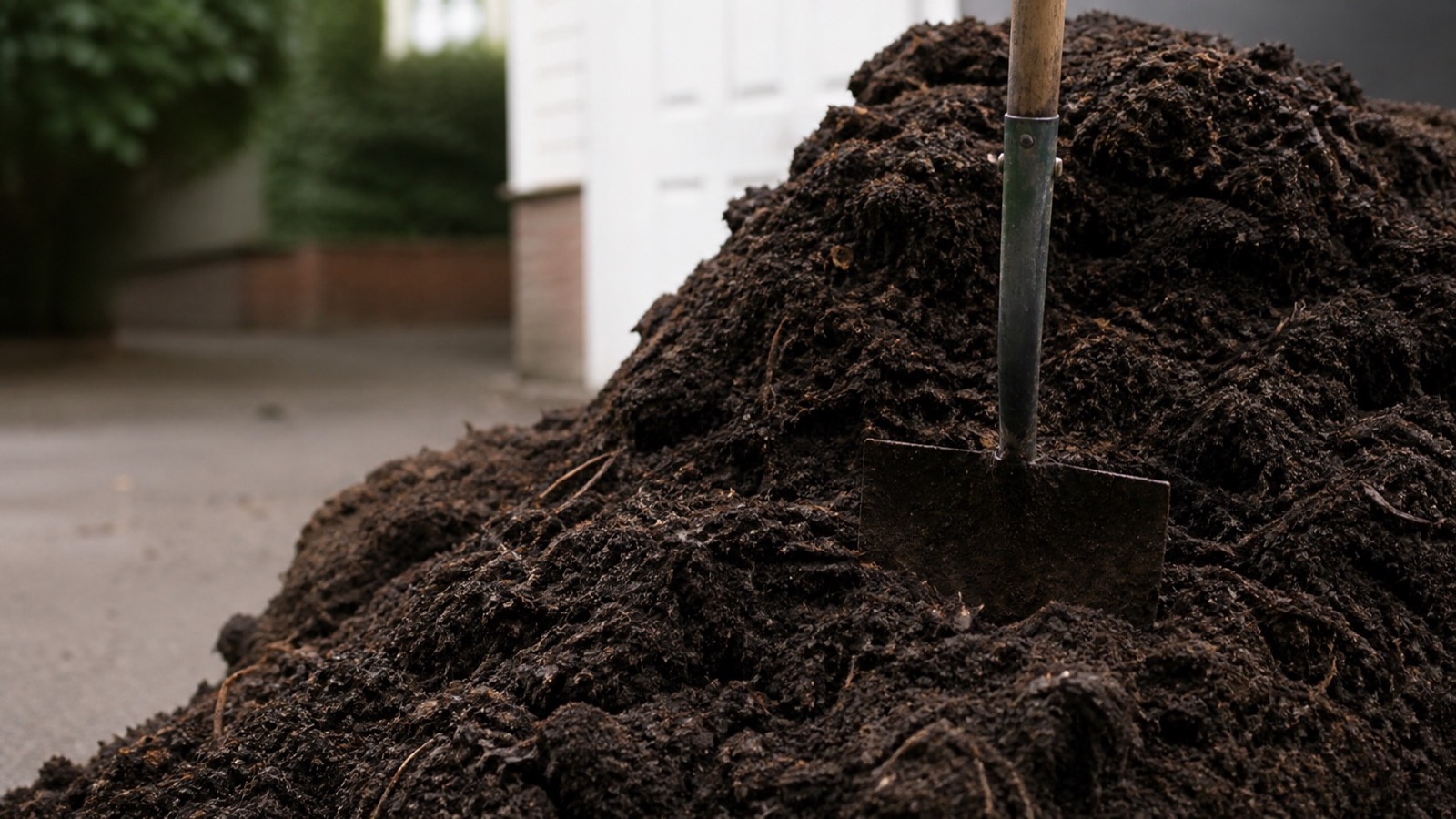
The smell test
Good compost smells of forest floor. Ammonia means it is immature and nitrogen is still being lost. Sour or sulphurous means it went anaerobic in the heap and needs airing before use.
A strong manure smell in something sold as compost usually means it has not finished.
The herbicide problem
This is the serious one. Aminopyralid and clopyralid are used on pasture and hay. They survive the animal, the manure heap and the composting process, and they damage tomatoes, potatoes, beans and peas at concentrations too low to detect any other way.
The bioassay: plant three broad bean or pea seeds in the suspect compost and three in known-good soil. Grow both for two to three weeks. Twisted, cupped, fern-like new growth in the test pots means contamination. Do not use that batch, and it cannot be fixed by airing or ageing it in a season.
Other things to check
Plastic fragments, which are common in municipal green-waste compost. Excess salt in some manure-based products. Weed seeds in anything cold-composted.
Related
Using your own: using your compost. Maturity: using unfinished compost.
Further reading on bulk compost
Independent sources worth reading alongside this page: University of Georgia Extension, Composting · EPA, Composting at Home.