Can you compost paper towels?
Yes for paper towels used with water, food or spills. No for anything used with household cleaners, disinfectants or chemicals, and use judgement on anything that mopped up raw meat juices. Below: whether you can compost paper towels, why, how much to add, and the mistakes that cause trouble.
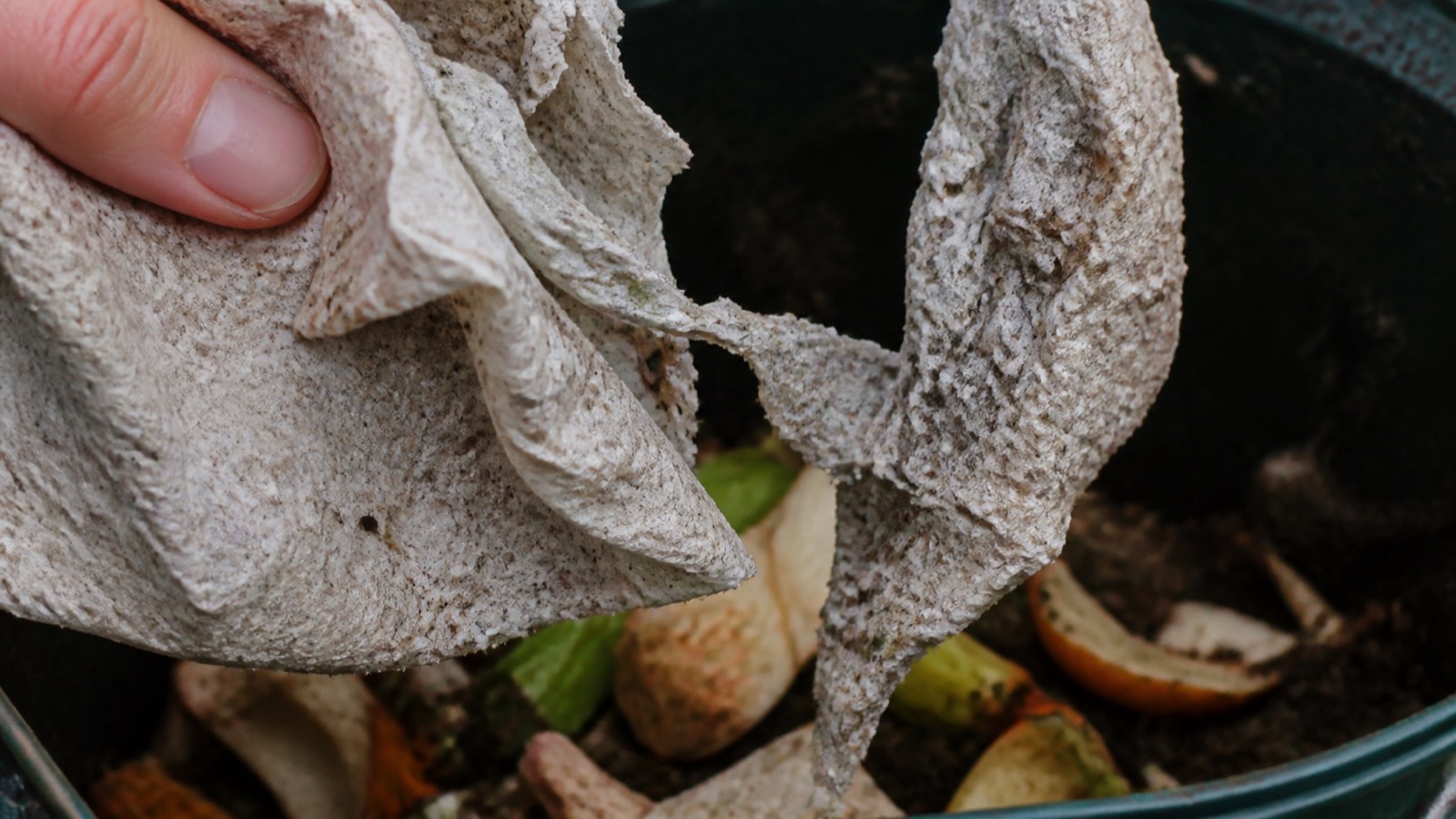
Why
Paper towel is short-fibre cellulose. It breaks down quickly, absorbs moisture well and counts as a brown, though a weaker one than cardboard.
How to add it
Tear it up and mix it in. Wet towels break down faster than dry ones.
Napkins, paper plates without a plastic coating, and unbleached kitchen roll all behave the same way.
Common mistakes
Composting towels used with bleach or antibacterial spray. Those are designed to kill the organisms you are cultivating.
Assuming all ‘paper’ plates are paper. Many are plastic-lined and will leave you picking film out of finished compost.
What the “used with what” rule actually means
Paper towel is inert cellulose. Whether it can be composted is entirely a question of what is on it, not what it is.
Water, food spills, coffee, crumbs: straight in.
Cooking oil or grease: small amounts are tolerable; a towel saturated with fat is not. Fat repels water and goes rancid.
Cleaning products, bleach, disinfectant, polish: keep out. These are designed to kill microorganisms, which is precisely what you are cultivating.
Raw meat juices: the same reasoning as composting meat. Small residues in a hot pile are fine, but in a cold domestic pile it is an unnecessary pathogen and rodent risk.
Tissues and napkins
Both compost readily. Used tissues are fine in a garden pile. The pathogens involved do not survive long outside a host, and they are not going anywhere near your salad. If that bothers you, keep them out; the volume is small either way.
The plastic-lining trap
Many paper plates, takeaway containers and “paper” cups have a polyethylene or PLA lining. They look like paper, tear like paper, and leave a plastic film in your finished compost. If it is glossy on one side, be suspicious. See is compostable packaging really compostable.
As a brown
Paper towel is a weaker brown than cardboard. It is thinner, breaks down faster, and provides less structure. Useful as part of the mix, not as your main carbon source.
Related
More materials in the material library. New to this? How to compost.
Further reading on compost paper towels
Independent sources worth reading alongside this page: EPA, Composting at Home · Cornell Waste Management Institute.