Is compostable packaging really compostable?
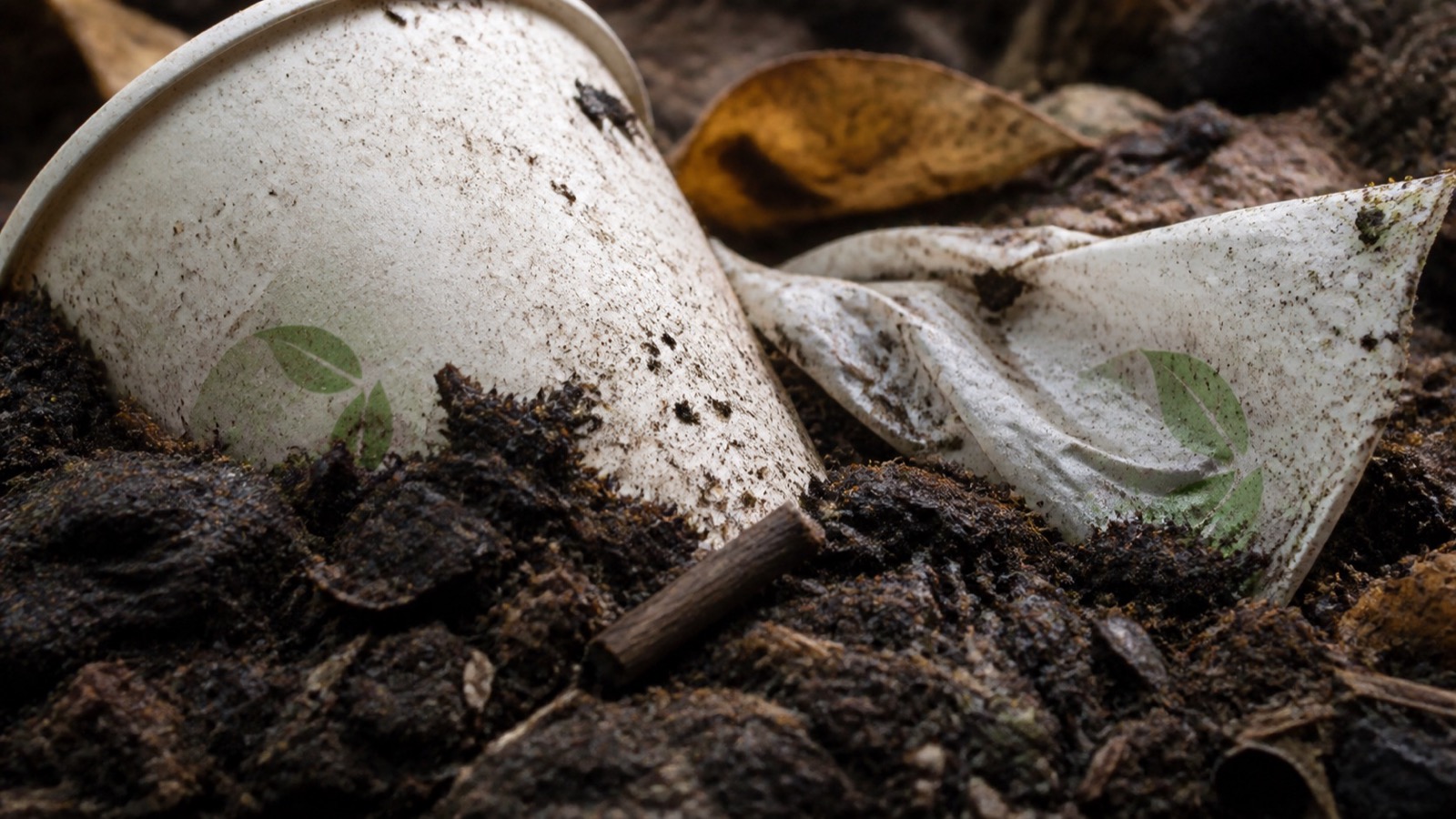
Usually not in your garden. Most packaging labelled compostable is certified for industrial composting. Sustained temperatures around 55-60°C for weeks. A backyard pile does not reach that, and the item will still be recognisable a year later. Below: the practical detail on compostable packaging, and what most guides leave out.
Why
The materials involved, PLA, bagasse blends, coated papers, are engineered to break down under specific, controlled conditions. The standards behind the labels (EN 13432, ASTM D6400) test at industrial-facility conditions, not garden ones.
A separate ‘home compostable’ certification exists and is much rarer. If packaging does not explicitly say home compostable, assume it is not.
How to add it
Check for a home-compostable mark specifically. If it has one, shred it and expect it to take a long time regardless.
Otherwise, find out whether your area has an industrial composting stream that actually accepts it. Many do not, in which case it goes to landfill whatever the label says.
Common mistakes
Reading ‘compostable’ as ‘compostable by me’. This is the whole problem, and it is a labelling failure, not a user error.
Assuming a paper cup is fine. Most are plastic-lined; the lining survives.
Where this genuinely bites
Compostable bin liners are the common case. Many are sturdy enough to still be intact when you turn a pile months later, which is maddening. Thin ones marked home compostable do break down; thick ‘compostable’ caddy liners frequently do not.
This is an area where the honest answer is that the labelling is not good enough yet for consumers to act on confidently.
Related
Community options: community composting. The material rules: material library.
Further reading on compostable packaging
Independent sources worth reading alongside this page: EPA, Composting at Home · Cornell Waste Management Institute.