Your August Compost Pile Is Probably Too Dry
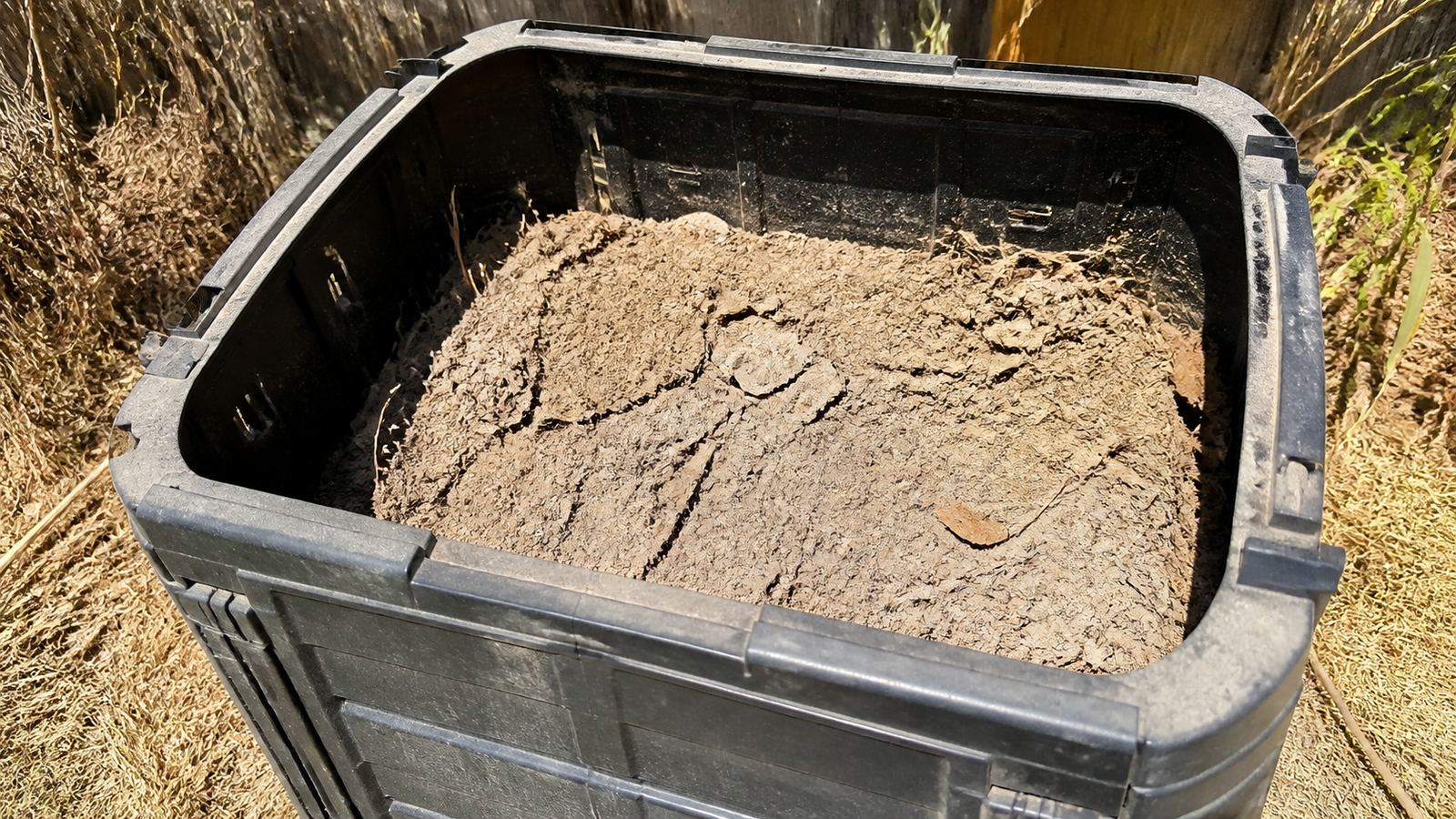
If you have not touched your pile since June, it is almost certainly too dry rather than too wet. August is when compost drying out stops being a nuisance and starts being the reason nothing has broken down since spring.
Why August catches people out
Most composting advice is written about wet piles. Sour smells, slimy grass, water pooling at the bottom. That advice is correct for spring and for fall rain, and it is why the instinct when a pile stalls is to add more browns.
In August the opposite is usually true. Six or eight weeks of heat and wind pull moisture out of a heap faster than a household’s kitchen scraps put it back. The pile goes quiet, the volume stops dropping, and because a dry pile does not smell of anything, nothing tells you it has stopped working. A wet pile announces itself. A dry one just sits there looking like compost and doing nothing.
Microbes need water to move and to feed. Below roughly 40 percent moisture they go dormant. They are not dead, and you have not ruined anything, but they will do very little until you rewet the pile properly.
The ten second test
Reach into the middle of the pile, not the surface, and squeeze a handful. The top couple of inches of any heap are dry in August and soaked after rain, so the surface tells you nothing useful.
One or two drops of water is right. A trickle means too wet. If it crumbles apart in your hand and leaves your palm dusty, that is compost drying out, and it is the single most common August problem.
Water it while you turn it, not from the top
This is the part people get wrong. Dry organic matter repels water. Pour a can over a dusty heap and most of it runs down the outside and into the ground, wetting the top inch or two and nothing else. Two days later the middle is exactly as dry as it was.
The only reliable method is to fork the pile apart into a second heap and water each forkful as you go. It is tedious. It also takes about fifteen minutes for a domestic pile and it is the difference between finished compost in fall and the same heap sitting there next spring.
If you have nothing to fork it into, take the top half off, water the bottom half, and put the top back, watering as you go.
Then give it something wet to eat
A rewetted pile with no nitrogen will dry out again and stall again. Kitchen scraps are mostly water, which makes them the cheapest fix available. Grass clippings work too, provided you mix them through rather than dropping a whole catcher in one layer.
If you have been stockpiling browns since spring, resist the urge to add more of them now. August piles are rarely short of carbon.
What not to bother with
Compost activator sachets will not fix a dry pile. Neither will burying a fresh load of scraps in one corner and hoping. And do not seal the bin to trap moisture, because a lid with no air movement swaps one problem for a worse one.
The reason it matters now
Fall is six weeks away, and fall is when a pile gets buried under more brown material than it will see all year. A heap that goes into September dry and dormant does not process any of it. A heap that is damp and active in September will chew through leaves all through October.
Fifteen minutes with a fork and a watering can now is worth more than anything you do to the pile in November.
Related reading on compost drying out
The full diagnosis is at compost too dry, and the rest of the season is covered in summer compost maintenance. If the pile is also short of nitrogen, start with browns and greens. New to all of this? How to compost is the place to begin.
For the underlying moisture science, the Cornell Waste Management Institute is the reference we go back to most.