Vermont growing zones
Vermont spans roughly USDA zones 3b to 5a, coldest in the Northeast Kingdom and mildest in the Champlain Valley. In practice the growing season runs about 90 to 150 frost-free days depending where you are. Below: the practical detail on Vermont growing zones, and what most guides leave out.
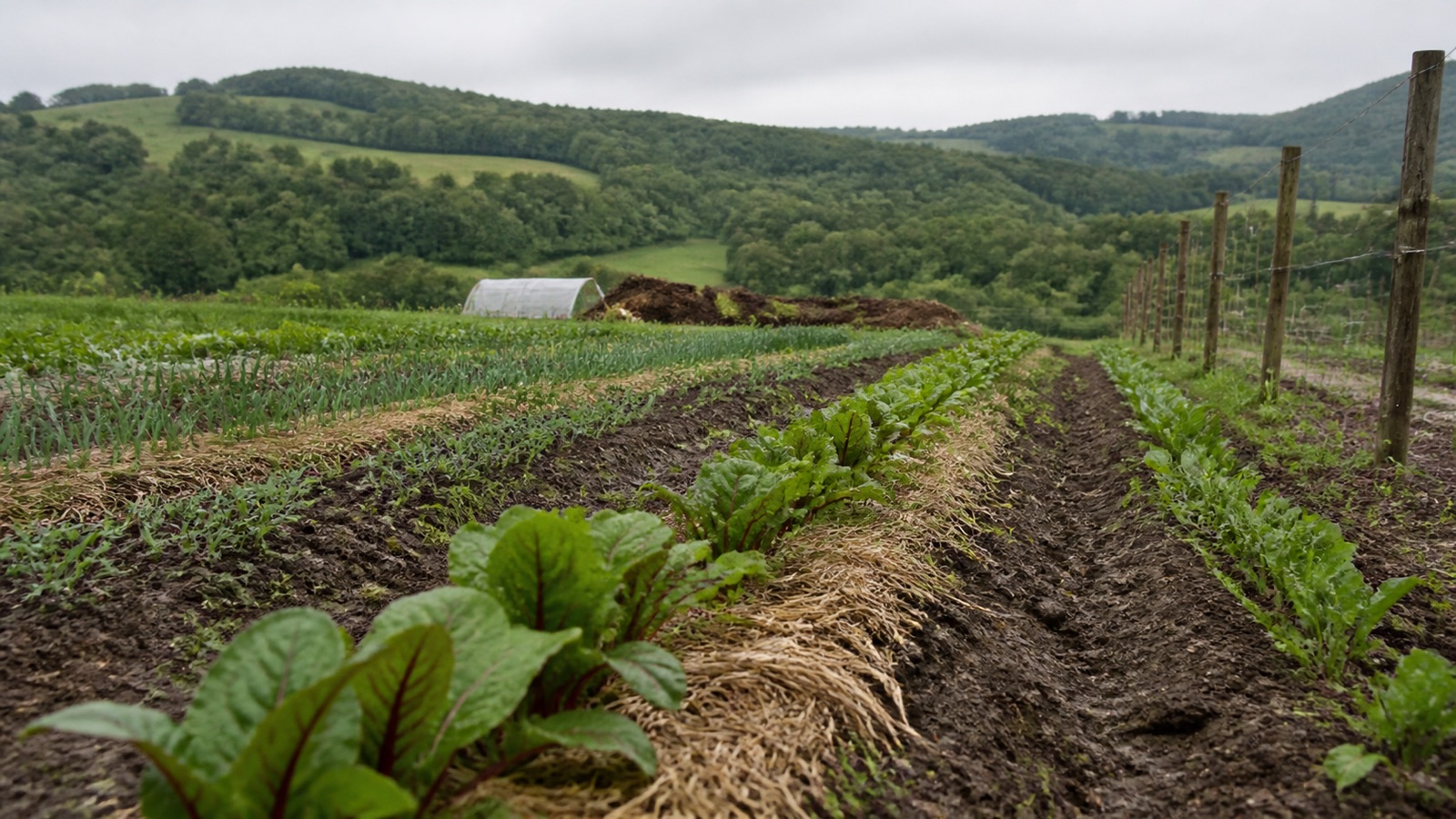
What the zones tell you
USDA hardiness zones describe average annual minimum winter temperature. They tell you whether a perennial will survive your winter. They say nothing about summer heat, season length or soil.
Roughly where the zones fall
Zone 3b: Northeast Kingdom, higher elevations.
Zone 4a-4b: much of the state.
Zone 5a: the Champlain Valley and lower Connecticut River valley.
Elevation shifts this significantly. A hillside can be a full zone colder than the valley below it.
What matters more than the zone
Frost dates. Last spring frost from mid-May to early June; first autumn frost from mid-September.
Soil temperature. Cold wet spring soil holds back planting more than air temperature does.
Where compost helps
Improved structure means better drainage, and better-drained soil warms earlier in spring, which in a short season is worth real days of growing time. A dark compost mulch also absorbs heat.
Related
Local growing advice: Vermont gardening tips. Hub: Vermont resources.
Further reading on Vermont growing zones
Independent sources worth reading alongside this page: Vermont Dept. of Environmental Conservation · EPA, Sustainable Management of Food.