Leaf mold
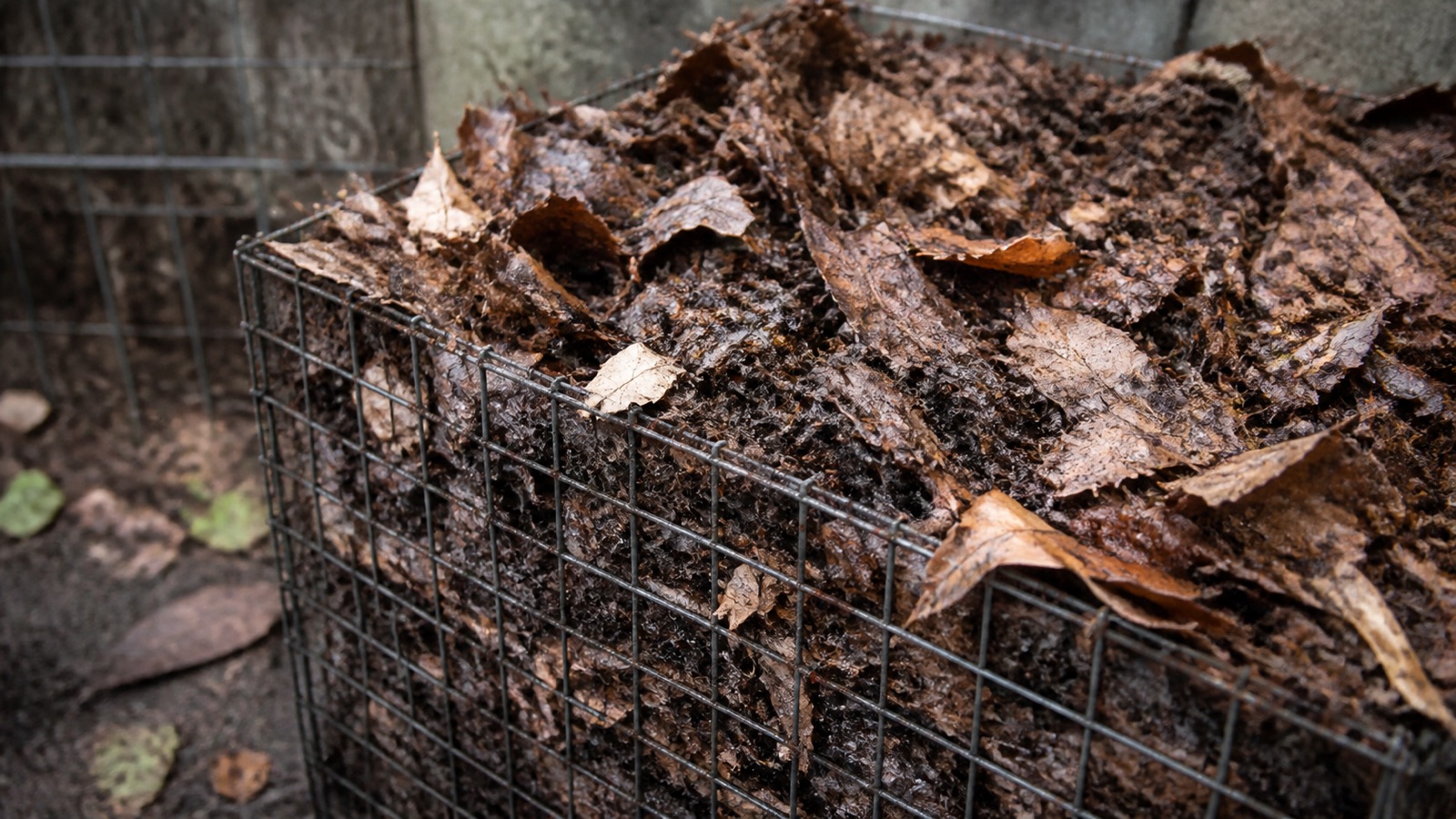
Put leaves in a bag or wire cage, dampen them, and wait a year or two. That is the whole method. The result is a dark crumbly material that is unmatched for improving soil structure and water retention. Below: how leaf mold works in practice, what it demands of you, and who it actually suits.
How it differs from compost
Compost is bacterial and warm. Leaf mold is fungal and cold. Leaves alone have almost no nitrogen, so bacteria cannot get going and fungi take over. Slower, and producing something different: low in nutrients, exceptional at holding water and opening up soil.
Method
Collect leaves. Shred them if you can. Mowing over them roughly halves the time. Pack them damp into a wire cage or black bin bags with holes punched in. Leave them somewhere out of the way. Check they stay damp.
Timing
One year for a rough usable mulch, two for fine crumbly leaf mold. Oak and beech take longer; sycamore and horse chestnut are quicker.
What to use it for
Soil conditioning, mulching, and as a component in seed-sowing mixes. Its low nutrient content is an advantage there.
Related
Leaves as a material: can you compost leaves. Autumn timing: fall leaf composting.
Further reading on leaf mold
Independent sources worth reading alongside this page: EPA, Composting at Home · Cornell Waste Management Institute.