Can you compost leaves?
Yes. Autumn leaves are the best free source of browns most households will ever have, and the single most useful thing you can do for next year’s compost is bag them now rather than letting the council take them. Below: whether you can compost leaves, why, how much to add, and the mistakes that cause trouble.
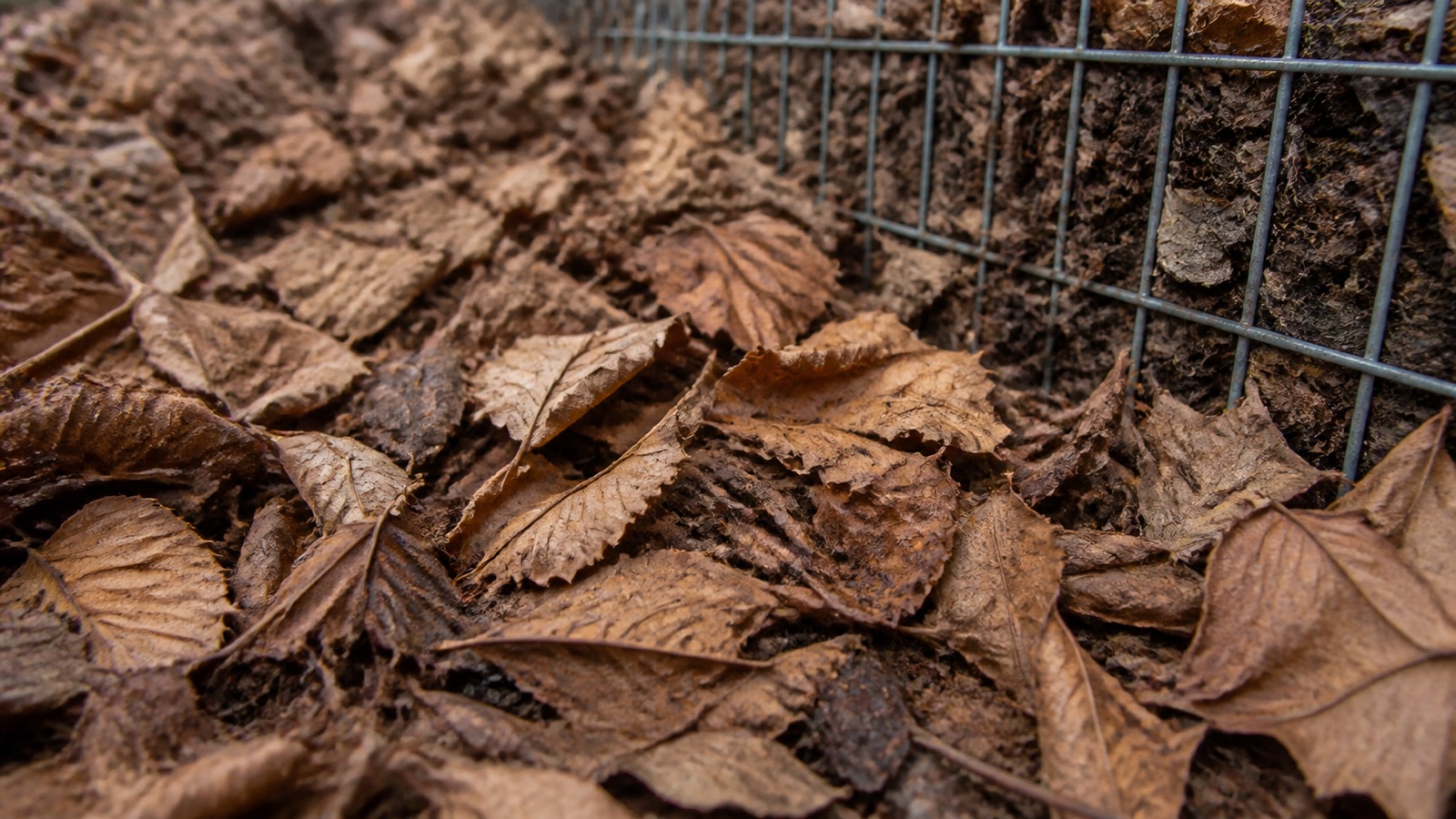
Why
Dry fallen leaves run around 60:1 carbon to nitrogen: solidly brown, though less extreme than cardboard or sawdust. They are structural enough to keep a pile open and absorbent enough to soak up excess moisture from food scraps.
Left alone with no nitrogen, leaves break down through fungi rather than bacteria, producing leaf mold, a different and excellent material.
How to add it
Shred if you can. Running a mower over a row of leaves cuts the breakdown time by more than half. Whole leaves mat, especially when wet.
Store them dry in bags or a wire cage and add them through the year as your counterweight to kitchen scraps.
Common mistakes
Adding a thick layer of whole wet leaves, which forms a waterproof mat.
Composting them alone and expecting compost. With no nitrogen you get leaf mold, which takes a year or two: a fine outcome, but a different one.
Leaves that behave differently
Oak and beech are high in tannins and slower. Walnut contains juglone, which inhibits some plants. It does break down in composting, but if you grow tomatoes, keep walnut leaves out to be safe. Horse chestnut and sycamore break down quickly.
Related
The dedicated method: leaf mold. Seasonal timing: fall leaf composting.
Further reading on compost leaves
Independent sources worth reading alongside this page: EPA, Composting at Home · Cornell Waste Management Institute.