Compost problems
Nearly every compost problem is one of two things: too wet and airless, or too dry and inert. Find your symptom below. The fix is usually something you can do this afternoon with a fork. Below: the practical detail on compost problems, and what most guides leave out.
Organised by what you can observe, not by underlying cause, because you know what you can see and smell. You have almost certainly not ruined anything; compost is remarkably difficult to break permanently.
Start here
- It smells badSour, ammonia, eggs or putrid, each means something different.
- It is not heating upUsually size, moisture or nitrogen. Sometimes nothing is wrong.
- It is too wetSodden, heavy, water pooling at the bottom.
- It is too dryDusty, unchanged, looks the same as the day you added it.
- FliesFruit flies and house flies mean different things.
- RatsThe problem that ends most people’s composting. Mostly preventable.
- MouldWhite, green, or a strange orange. Usually fine.
- Nothing is happeningWhen slow is normal and when it is a symptom.
The two-minute diagnosis
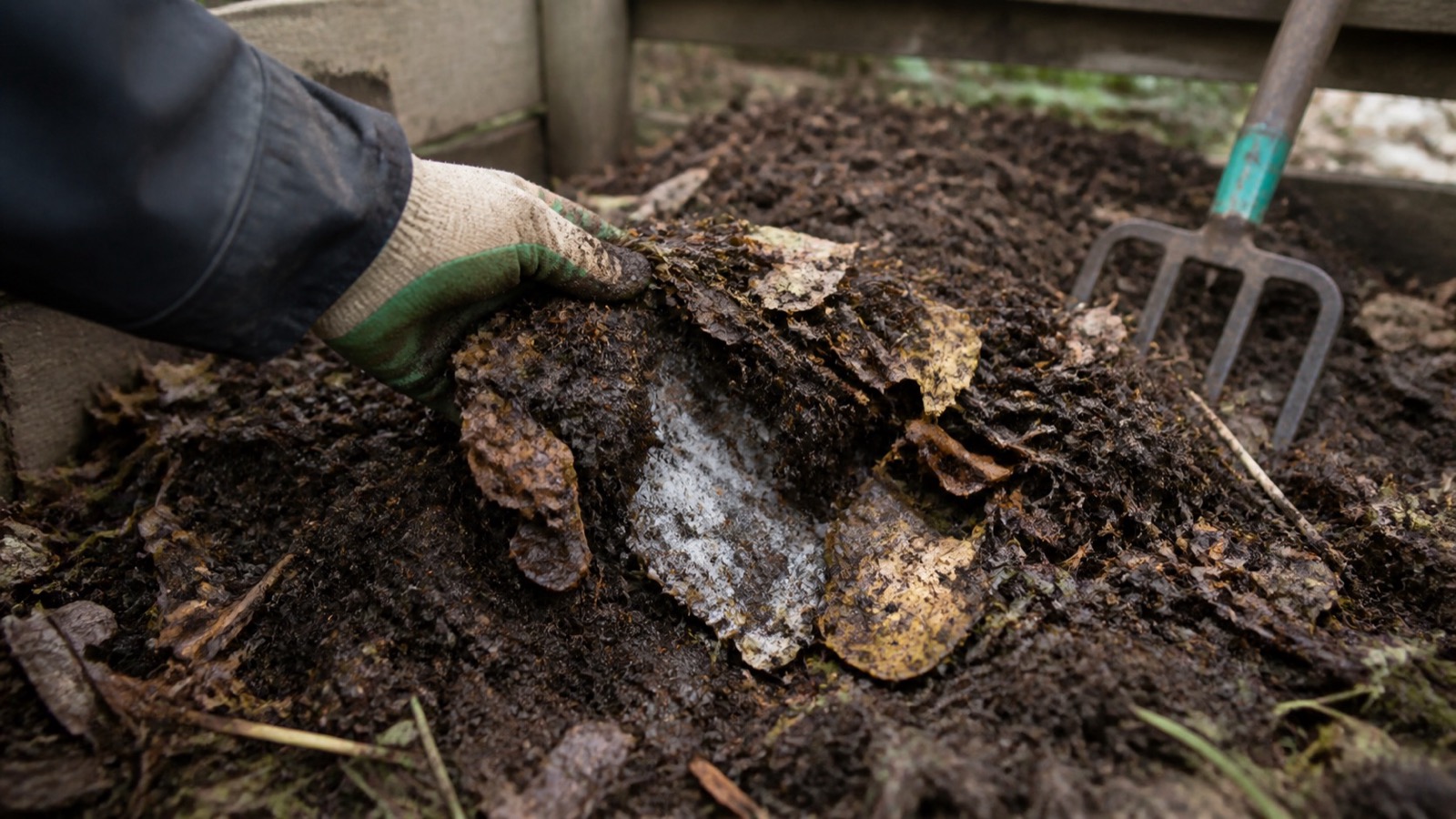
Grab a handful from the middle of the pile.
Does water run out when you squeeze? Too wet. Add browns, turn it, check what it is sitting on drains.
Does it crumble apart dry? Too dry. Water it as you turn, pour on top and it runs straight off.
Does it hold together like a wrung-out sponge? Moisture is right. If it is still slow, the pile is probably too small or too short of nitrogen.
Keep the troubleshooting table to hand
Composting 101 has the whole symptom-cause-fix table in a printable 14-page PDF, along with the moisture test that diagnoses most problems in ten seconds.
Further reading on compost problems
Independent sources worth reading alongside this page: EPA, Composting at Home · Cornell Waste Management Institute.