My compost is too wet
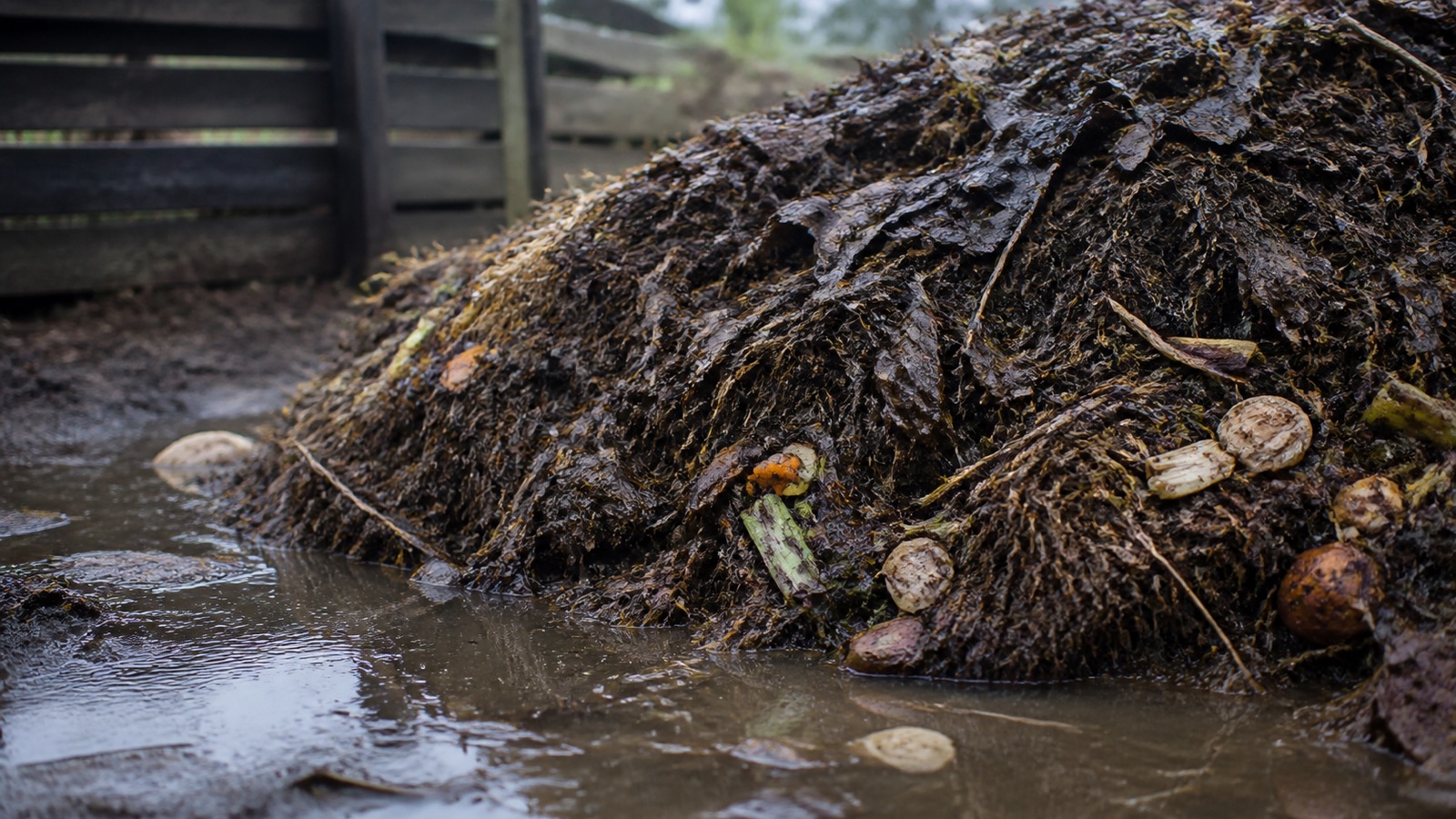
Add dry brown material and turn. Cardboard, shredded paper, dry leaves and straw all work. If water is pooling at the bottom, the problem is drainage rather than the pile itself. Below: what causes compost too wet, how to fix it today, and how to stop it happening again.
How wet is too wet
Squeeze a handful. A drop or two is right. A trickle is too wet. If it slumps and holds a fingerprint like clay, it is well past too wet.
The fix
Fork the pile open, mixing in dry material as you go: considerably more than seems reasonable, roughly twice the volume you first thought. If it is genuinely sodden, spread it on a tarp for a few hours first.
Stopping it recurring
Cover it if it sits in the open through a wet season. A loose lid or tarp, not a sealed one.
Check the base drains. A bin on compacted clay or a paved surface holds water. Bare soil, or a base layer of coarse twigs, gives it somewhere to go.
Balance as you add, rather than in emergencies. A handful of browns with every caddy of scraps.
Related
Wet piles usually smell, see compost smells bad. Index: compost problems.
Further reading on compost too wet
Independent sources worth reading alongside this page: EPA, Composting at Home · Cornell Waste Management Institute.