Can you compost flowers?
Yes. Cut flowers, deadheads and spent bedding plants all compost readily. The only things to watch are florist wire, foam and dyed blooms, and any plant showing obvious disease. Below: whether you can compost flowers, why, how much to add, and the mistakes that cause trouble.
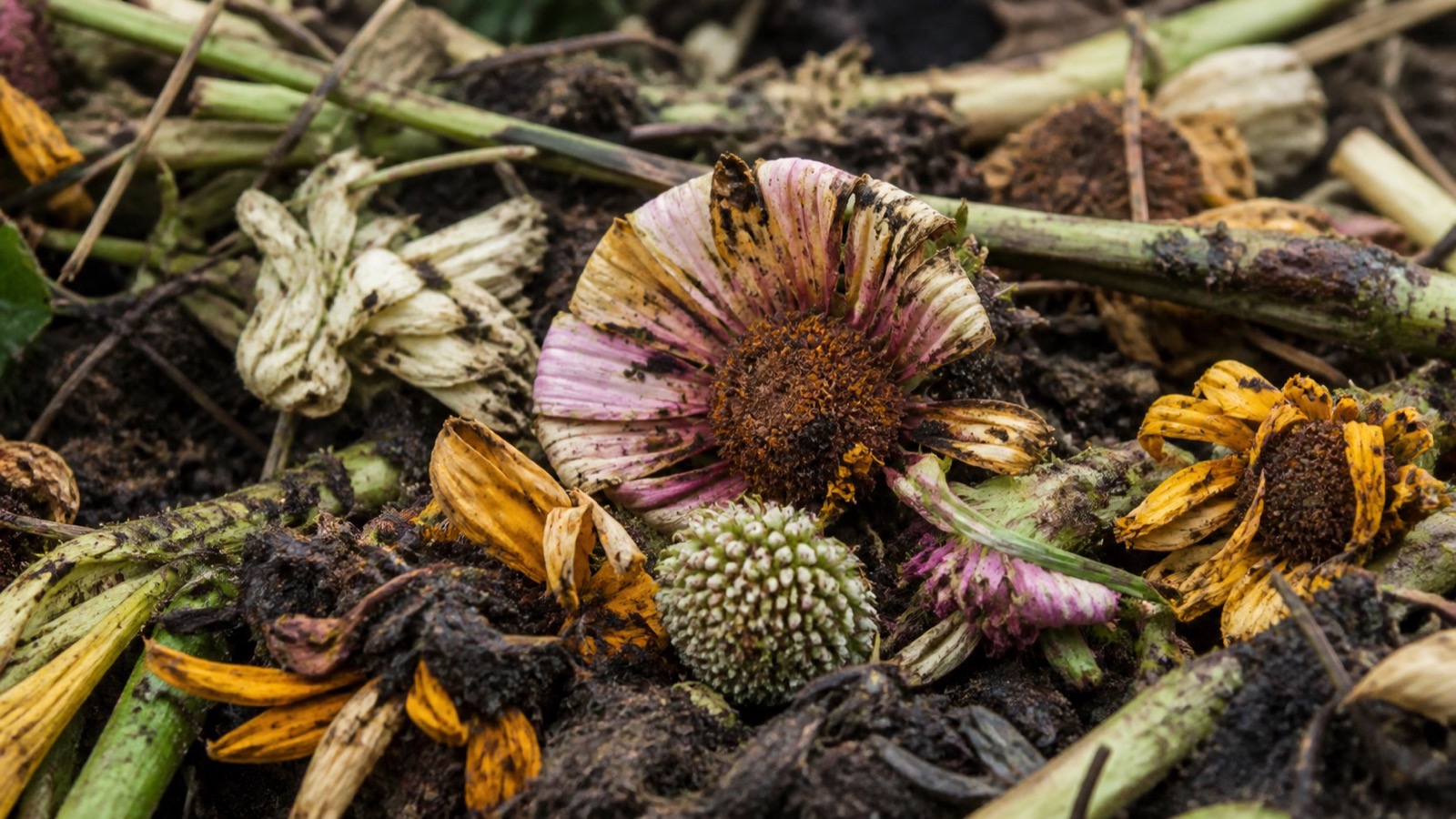
Why
Flower material is soft green tissue. Nitrogen-bearing and quick to break down. Woodier stems take longer and behave more like browns.
How to add it
Strip out wire, cable ties, ribbon and floral foam, which is plastic and does not break down. Chop woody stems.
Common mistakes
Composting florist foam. It fragments into persistent particles.
Adding heavily diseased material to a cold pile, where the pathogen may survive.
Cut flowers from a florist
Bouquet flowers are frequently treated with preservatives, and imported blooms may carry pesticide residues not permitted for food crops. In a garden pile the quantities are small and the material breaks down thoroughly, so this is a low concern, but if you are composting for a vegetable bed and receive flowers weekly, it is worth knowing.
The floral foam is the real problem. It is phenolic plastic, it fragments rather than decomposes, and it will be in your compost as tiny green crumbs for years. Pull it out completely.
Deadheads and spent bedding
Deadheading produces a steady trickle of soft green material through the summer: ideal pile fodder, and it arrives at the time of year when most people are short of greens after the spring flush is over.
Spent bedding plants can go in whole, roots, compost and all. Knock most of the potting medium off first if it is peat-based and you would rather not add it.
Diseased flowers
Roses with black spot, phlox with mildew, tulips with fire. The fungal spores survive a cold pile comfortably. A hot pile above 55°C destroys most of them. If you cold compost and the plant was badly infected, keep it out.
Woody stems
Rose and hydrangea stems, lavender wood and shrub prunings are browns, not greens, and they are slow. Chop them or run them through a shredder, or accept that you will be sieving them out of finished compost and returning them to the next pile.
Related
More materials in the material library. New to this? How to compost.
Further reading on compost flowers
Independent sources worth reading alongside this page: EPA, Composting at Home · Cornell Waste Management Institute.