Hot and humid climate composting
In the Southeast and Gulf states everything decomposes fast, which sounds like an advantage until you meet the smell, the fire ants and the fruit flies. Your job is managing speed and moisture, not encouraging them. Below: how humid climate composting works in practice, what it demands of you, and who it actually suits.
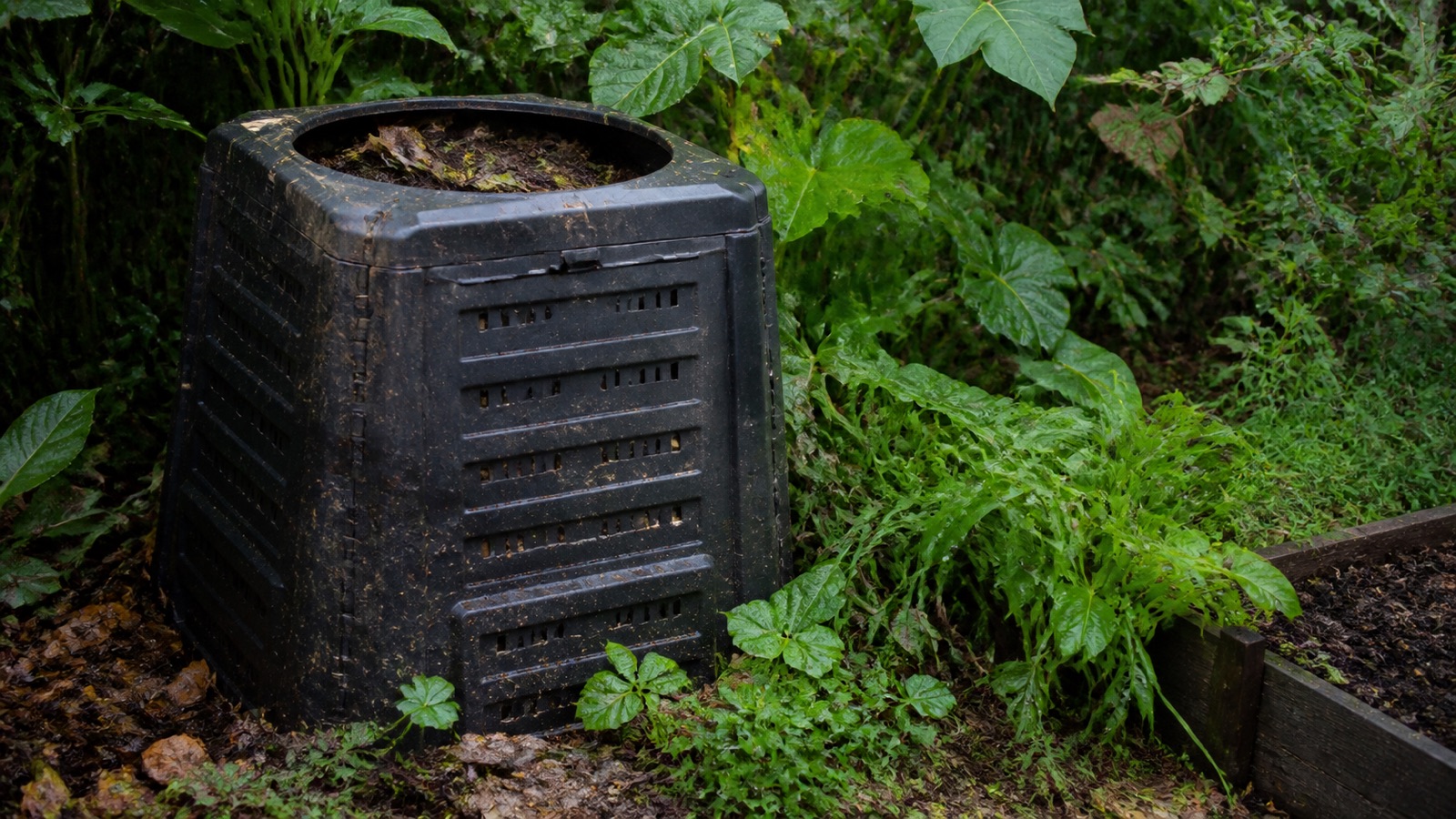
The constraint: it rots faster than you can manage it
Warm, wet conditions mean a pile can go from fresh to anaerobic in days rather than weeks. Food waste left exposed attracts insects almost immediately.
What works
More browns than you think. High humidity means material stays wetter for longer, so the dry-material buffer needs to be bigger.
Bury every food addition deeply and immediately. This is not optional here.
Turn more often. Faster decomposition means oxygen is consumed faster.
Shade the pile but keep it drained. Both matter simultaneously.
Pests
Fire ants colonise dry, undisturbed piles. Keeping it damp and turned is the main deterrent. Roaches and soldier fly larvae are common and, unappealing as they are, effective decomposers.
Hurricane season
An open pile in a flood zone is a debris problem. A contained bin, or a pile sited away from drainage paths, saves cleanup.
Related
Smell problems: compost smells bad. Flies: flies in compost. Hub: composting by climate.
Further reading on humid climate composting
Independent sources worth reading alongside this page: EPA, Composting at Home · Cornell Waste Management Institute.