Cold climate composting
In zones 3 to 5 your pile is effectively in storage from December to March. Build volume before winter, insulate it, stop turning, and keep adding. It restarts on its own once soil temperatures rise. Below: how cold climate composting works in practice, what it demands of you, and who it actually suits.
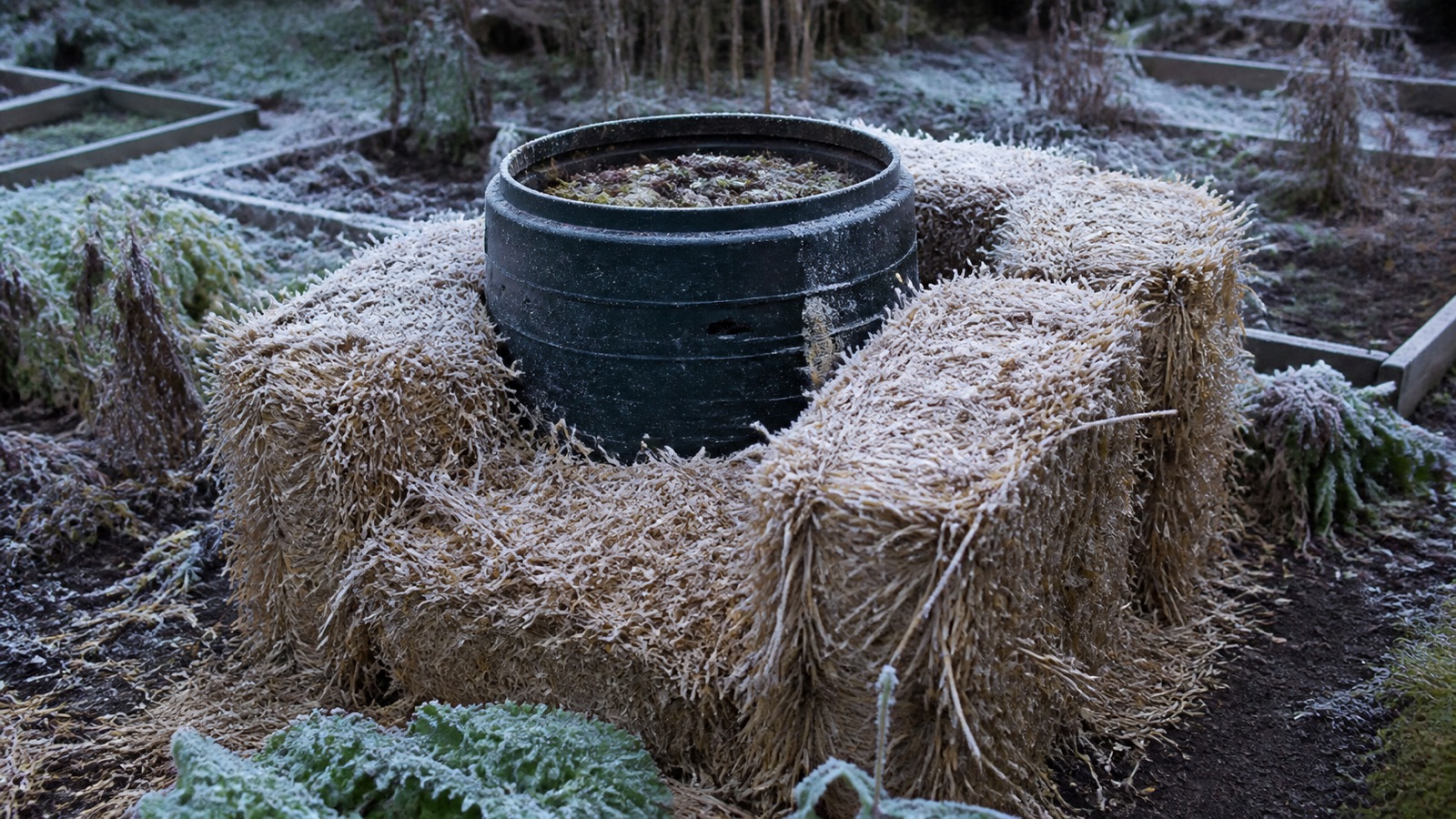
The constraint: the pile pauses
Microbial activity falls off sharply below 10°C and is negligible at freezing. You are not doing anything wrong; you are waiting.
What works
Go into winter big. A cubic metre or more holds a warm core for weeks past the first hard frost.
Insulate the top with a thick cap of leaves or straw.
Stop turning once it is cold, turning vents the heat you have.
Site it for spring sun so it thaws early.
The real problem is logistics
People stop composting in cold climates because the bin is across deep snow and the lid is frozen shut, not because the biology defeated them. Move the bin closer before the first storm, or freeze scraps and make one trip a week.
The upside
Freeze-thaw cycles rupture plant cell walls. A pile that froze all winter often breaks down noticeably faster in spring than one that never did.
Related
The flagship regional section: Vermont resources. Seasonal detail: winter composting. Hub: composting by climate.
Further reading on cold climate composting
Independent sources worth reading alongside this page: USDA Plant Hardiness Zone Map · Cornell Waste Management Institute.