Compost for flower beds
2-3cm on the surface in spring, worked around emerging perennials. Flower beds generally need less than vegetable beds, and some of the best-loved garden plants actively prefer poorer soil. Below: how much compost for flowers to use, when to apply it, and where it does more harm than good.
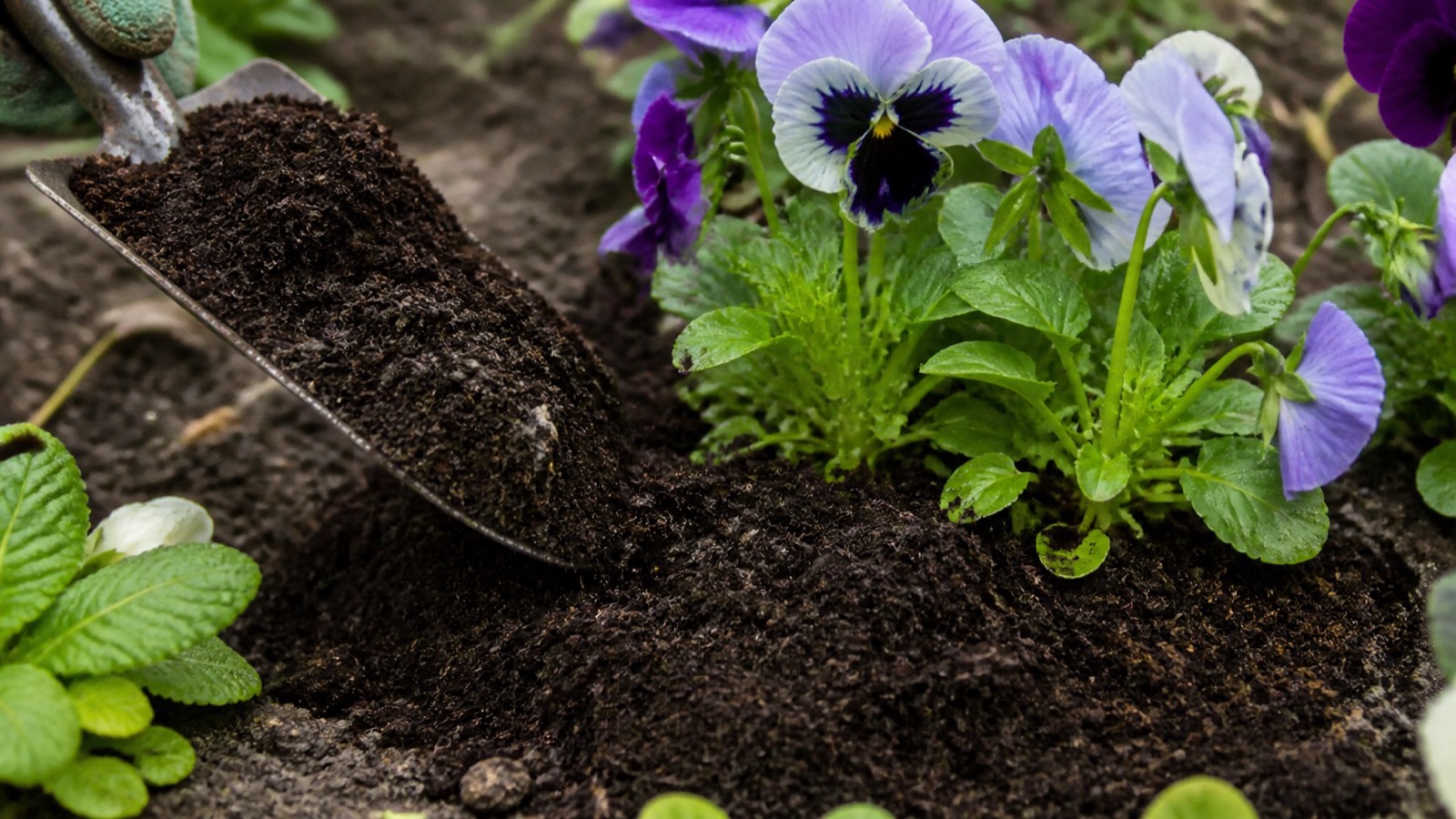
Perennial borders
An annual mulch of 2-3cm suppresses weeds, holds moisture and feeds gradually. Apply in spring once the soil has warmed but before growth is dense enough to make access awkward.
Annuals and bedding
Fork a little into the planting area before setting plants out. Annuals grow fast and benefit from more available nutrition than perennials.
Plants that prefer lean soil
Lavender, rosemary, thyme, most Mediterranean plants, and many alpines. Rich soil produces soft growth, poor flowering and reduced winter hardiness. Leave these out of the compost round.
Perennial borders
An annual mulch of 2-3cm does three jobs at once: suppresses weed germination, holds moisture through summer, and feeds gradually as worms pull it down. Apply in spring once the soil has warmed but before growth is dense enough to make access awkward. Typically as the first shoots are showing.
Work around the crowns rather than over them. Compost heaped over the crown of a herbaceous perennial in a wet winter is a reliable way to rot it.
Annuals and bedding
Annuals grow fast, flower hard and have a single season to do it, so they benefit from more available nutrition than perennials. Fork a couple of centimetres into the top of the bed before planting out.
Roses
Heavy feeders and they respond visibly. A generous mulch in spring, kept clear of the stem, plus a second lighter application after the first flush. Compost alone will not supply everything a repeat-flowering rose wants, but it improves the soil that everything else depends on.
Bulbs
Surface mulch is fine and helpful. Do not dig compost into a bulb planting hole. Bulbs sitting in rich moisture-retentive material are more prone to rot, and most spring bulbs carry their own energy reserves anyway.
Plants that want poor soil
Lavender, rosemary, thyme, sage, most Mediterranean shrubs, and nearly all alpines. Rich soil produces soft sappy growth, fewer flowers, and markedly reduced winter hardiness. A lavender in enriched soil is far more likely to die in a wet cold winter. Leave these out of the annual compost round entirely.
Wildflower areas
Actively counterproductive. Wildflower meadows depend on low fertility to stop grasses outcompeting the flowers. Adding compost to a wildflower area produces a stand of vigorous grass and very little else.
Related
Rates: using your compost.
Further reading on compost for flowers
Independent sources worth reading alongside this page: University of Georgia Extension, Composting · EPA, Composting at Home.