Compost for houseplants
Garden compost is usually the wrong material for pots on its own. It compacts, holds too much water, and may carry fungus gnats indoors. Use it as up to a third of a mix, not as the mix. Below: how much compost for houseplants to use, when to apply it, and where it does more harm than good.
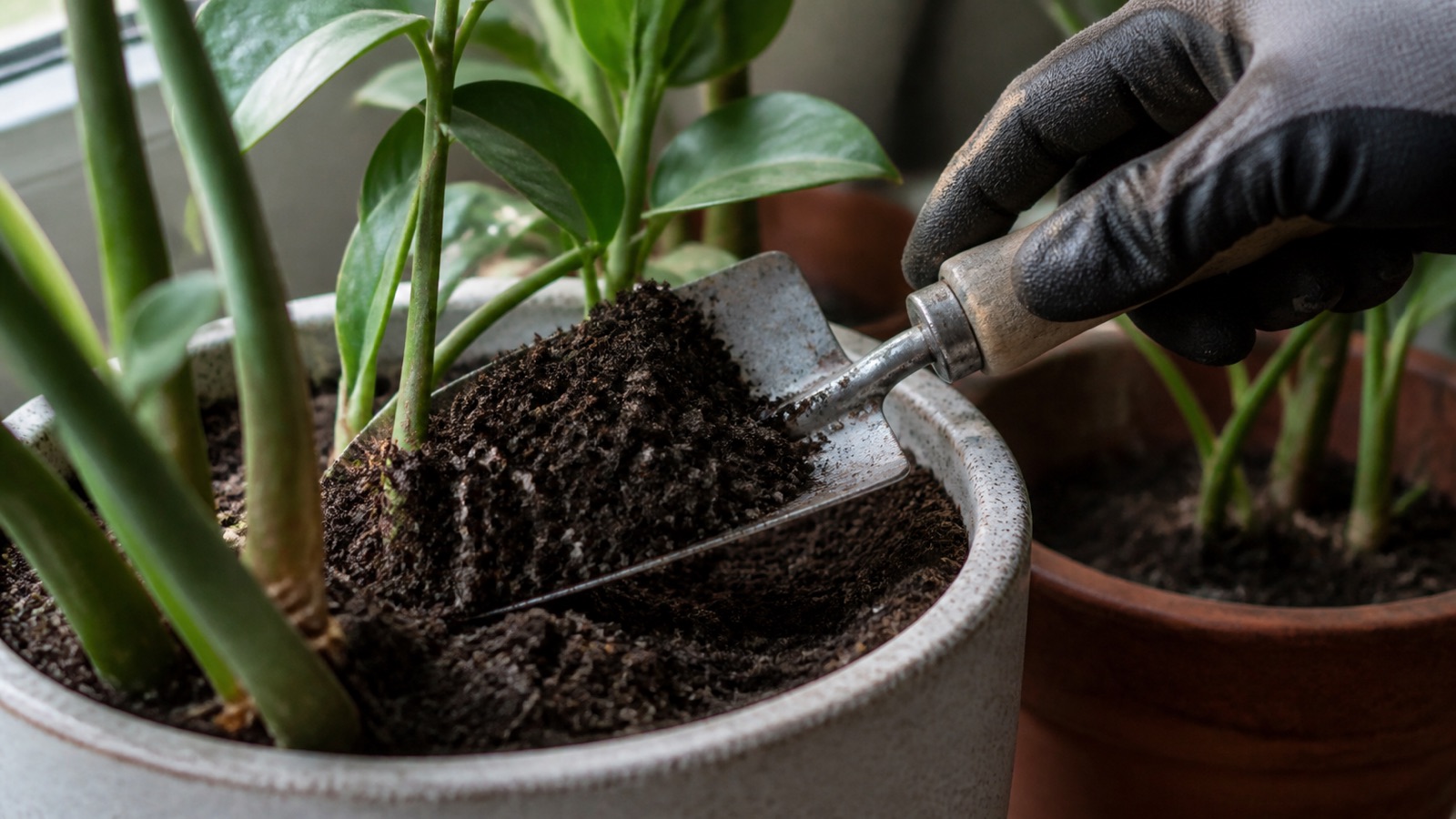
Why neat compost fails in a pot
A container has no drainage profile and no worms. Compost that behaves beautifully in a bed slumps into a dense, waterlogged mass in a pot, and roots suffocate.
A workable mix
Roughly one third sieved compost, two thirds a free-draining potting medium, plus perlite or coarse grit for anything that resents wet feet.
Fungus gnats
Garden compost frequently brings them indoors. Sieving and a period of drying reduces the risk; a top layer of grit discourages egg-laying.
Related
Worm castings: vermicomposting. Rates: using your compost.
Further reading on compost for houseplants
Independent sources worth reading alongside this page: University of Georgia Extension, Composting · EPA, Composting at Home.