Compost for lawns
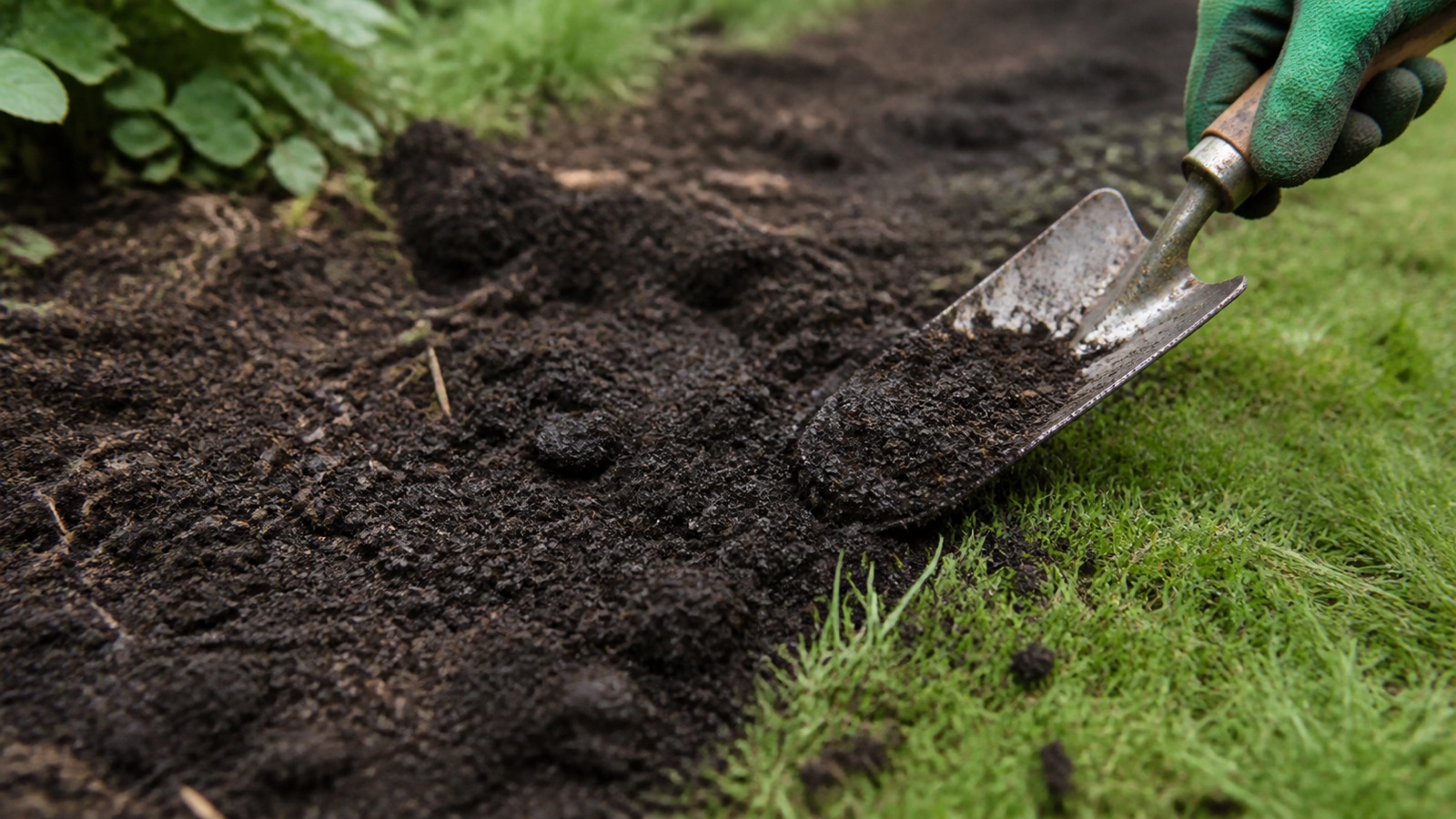
Screen it fine and apply 5-10mm, brushed into the sward. More than a centimetre smothers grass, which is the one way to actively damage a lawn with compost. Below: how much compost for lawns to use, when to apply it, and where it does more harm than good.
Method
Mow short first. Sieve the compost. Lumps sit on the surface and kill patches. Spread thinly and work it down between the blades with a stiff broom or the back of a rake. The grass should still be visible when you finish.
Timing
Early autumn is best in a cold climate: soil still warm, grass still growing, less heat stress. Spring works too.
Combine with aeration
Top-dressing straight after hollow-tining lets compost fall into the holes, which does far more for compacted soil than surface application alone.
Why top-dress a lawn at all
Lawns are the one part of most gardens where organic matter is continuously removed and never returned. You cut the grass and take it away, year after year. Top-dressing puts some back. Over several seasons it improves soil structure, water retention and root depth, which is what makes a lawn resilient in a dry August.
Screening matters more here than anywhere else
Compost lumps sitting on a lawn kill the grass beneath them within days. Sieve through 6mm mesh. This is tedious and it is not optional. Unscreened compost is the main reason people damage a lawn while trying to improve it.
How to spread it
Mow short. Tip small heaps across the area rather than one large pile. Work it down between the grass blades with the back of a rake or a stiff brush until the grass is visible again. If you can see a continuous brown layer, you have used too much.
Combine with aeration for real results
Hollow-tine the lawn first, leaving the cores on the surface or removing them, then top-dress. The compost falls into the holes and reaches the root zone directly instead of sitting on the surface. This combination does more for a compacted lawn in one autumn than three years of surface dressing alone.
Timing
Early autumn is best in a cold climate. The soil is still warm, the grass is still growing and will knit through the dressing, and there is no summer heat stress. Spring works, but growth is competing with everything else you are asking of the lawn.
Overseeding
Top-dressing is an excellent moment to overseed. The compost layer holds moisture around the seed and improves germination noticeably compared with broadcasting onto bare turf.
Related
Seed survival: can you compost weeds. Rates: using your compost.
Further reading on compost for lawns
Independent sources worth reading alongside this page: University of Georgia Extension, Composting · EPA, Composting at Home.