Compost for raised beds
Top up with 3-5cm each spring. Raised beds sink every year. That is the organic matter you added being consumed, which is the system working, not a fault. Below: how much compost for raised beds to use, when to apply it, and where it does more harm than good.
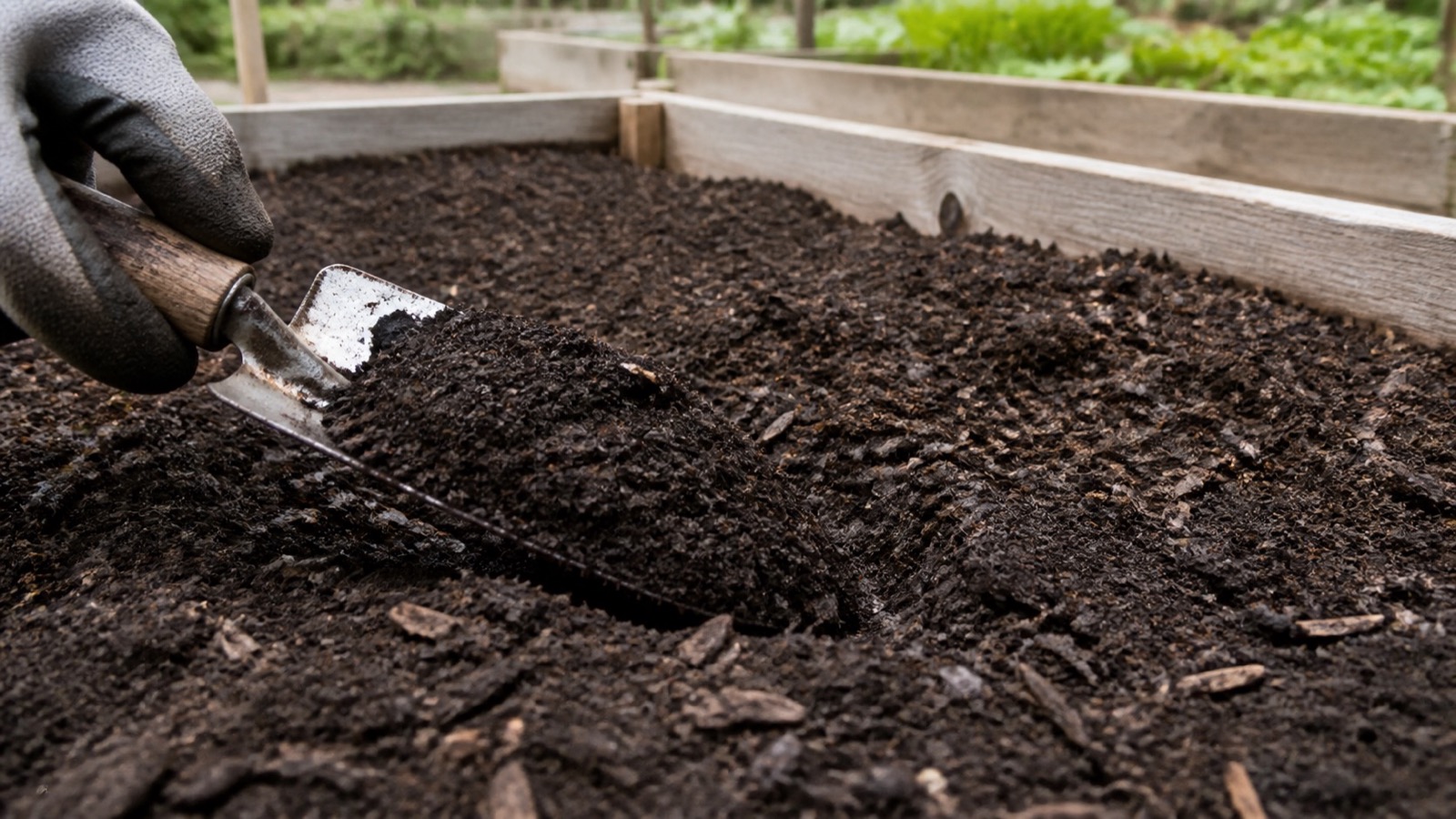
Why beds sink
Organic matter is continuously respired by soil life. A bed filled with a compost-heavy mix will drop several centimetres in its first year and less thereafter. Topping up annually is simply maintenance.
Filling a new bed
Do not fill it with pure compost. It slumps, holds too much water, and is nutritionally lopsided. A rough third compost, two thirds topsoil or a soil-based mix is more stable.
Topping up an established bed
3-5cm on the surface in spring. No need to mix.
Related
General rates: using your compost. Improving native soil: improving garden soil.
Further reading on compost for raised beds
Independent sources worth reading alongside this page: University of Georgia Extension, Composting · EPA, Composting at Home.