Composting in Vermont winters
Between December and March a Vermont pile is essentially in storage. The practical challenges are access, snow load and a frozen caddy: not the composting itself, which resumes without help once the ground thaws. Below: the practical detail on composting in Vermont winters, and what most guides leave out.
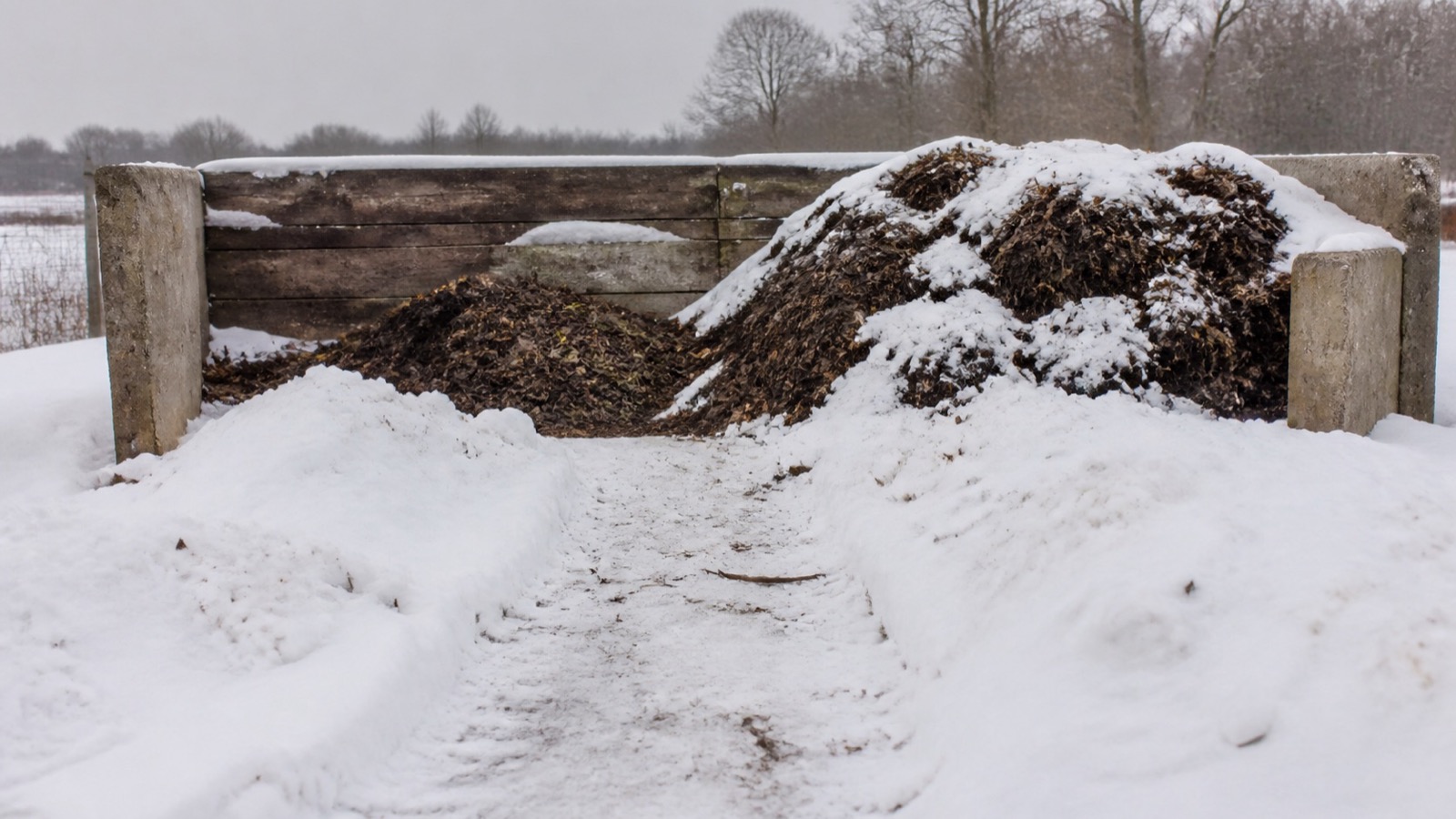
Plan the route, not the pile
The most common reason people stop composting in a Vermont winter is that the bin is forty metres away across unploughed snow. Move the bin closer before the first storm, or accept a bucket by the door and one trip a week.
Snow and ice
Snow is insulation and does no harm. A lid frozen shut is the real nuisance: a bin without a fitted lid, or an open bay you can tip into, is more usable in practice.
Build up in autumn
Go into winter with a large, well-balanced pile capped with leaves. It may keep a warm core into December, and it will restart faster in spring.
The caddy
Kitchen scraps freeze into a solid block, which is genuinely convenient: no smell, no flies. Many people simply keep a bag in the freezer through the winter and empty it when the pile thaws.
Related
The biology: winter composting. The law: Act 148. Hub: seasonal composting.
Further reading on composting in Vermont winters
Independent sources worth reading alongside this page: Vermont Dept. of Environmental Conservation · EPA, Sustainable Management of Food.