Winter composting
Decomposition slows almost to a stop near freezing and restarts on its own in spring. You can keep adding all winter; you just should not expect anything to happen until the thaw. Nothing needs rescuing. Below: how winter composting works in practice, what it demands of you, and who it actually suits.
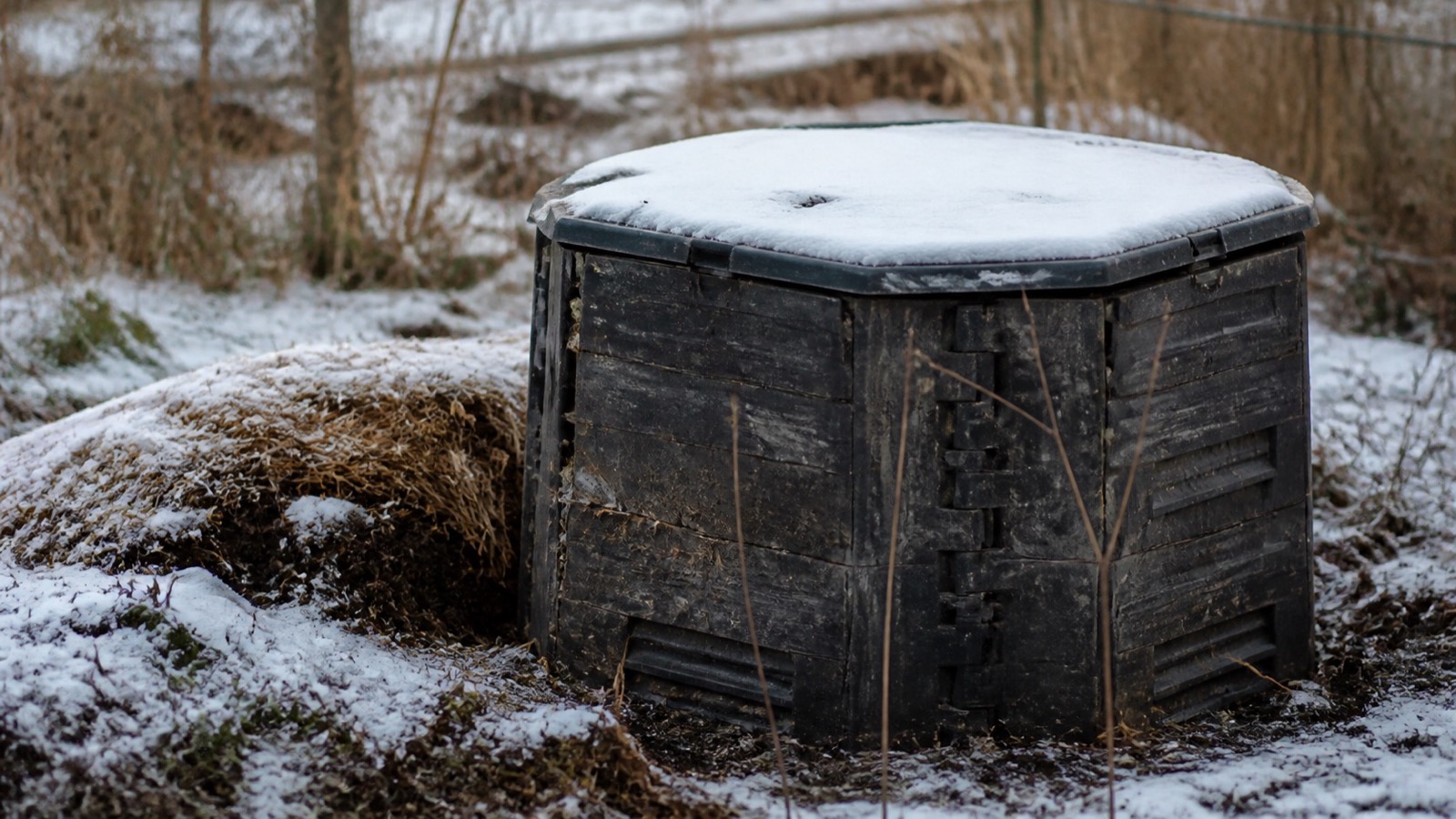
What happens to the biology
Microbial activity falls sharply below about 10°C and is negligible at freezing. A large, well-insulated pile can hold a warm core well into the cold, but most domestic piles simply pause.
What is worth doing
Build volume before winter. Bigger piles hold heat longer. A cubic metre or more may keep working for weeks after the first frost.
Insulate. A thick cap of leaves or straw genuinely extends the active period.
Keep adding. Scraps stockpile in place and process in spring.
Stop turning. Turning a winter pile releases the heat it has managed to keep.
What is not worth doing
Heating cables, hot water, and most winter-composting gadgets cost more than the delay is worth. A frozen pile is not a problem to solve.
Related
Vermont specifics: composting in Vermont winters. Restarting: spring preparation. Hub: seasonal composting.
Further reading on winter composting
Independent sources worth reading alongside this page: EPA, Composting at Home · Cornell Waste Management Institute.