Bokashi composting
Bokashi ferments food waste in a sealed bucket using inoculated bran. It handles meat and dairy, produces no smell if run properly, and works in a flat, but the output is pickled food waste, not compost, and it still has to go somewhere.
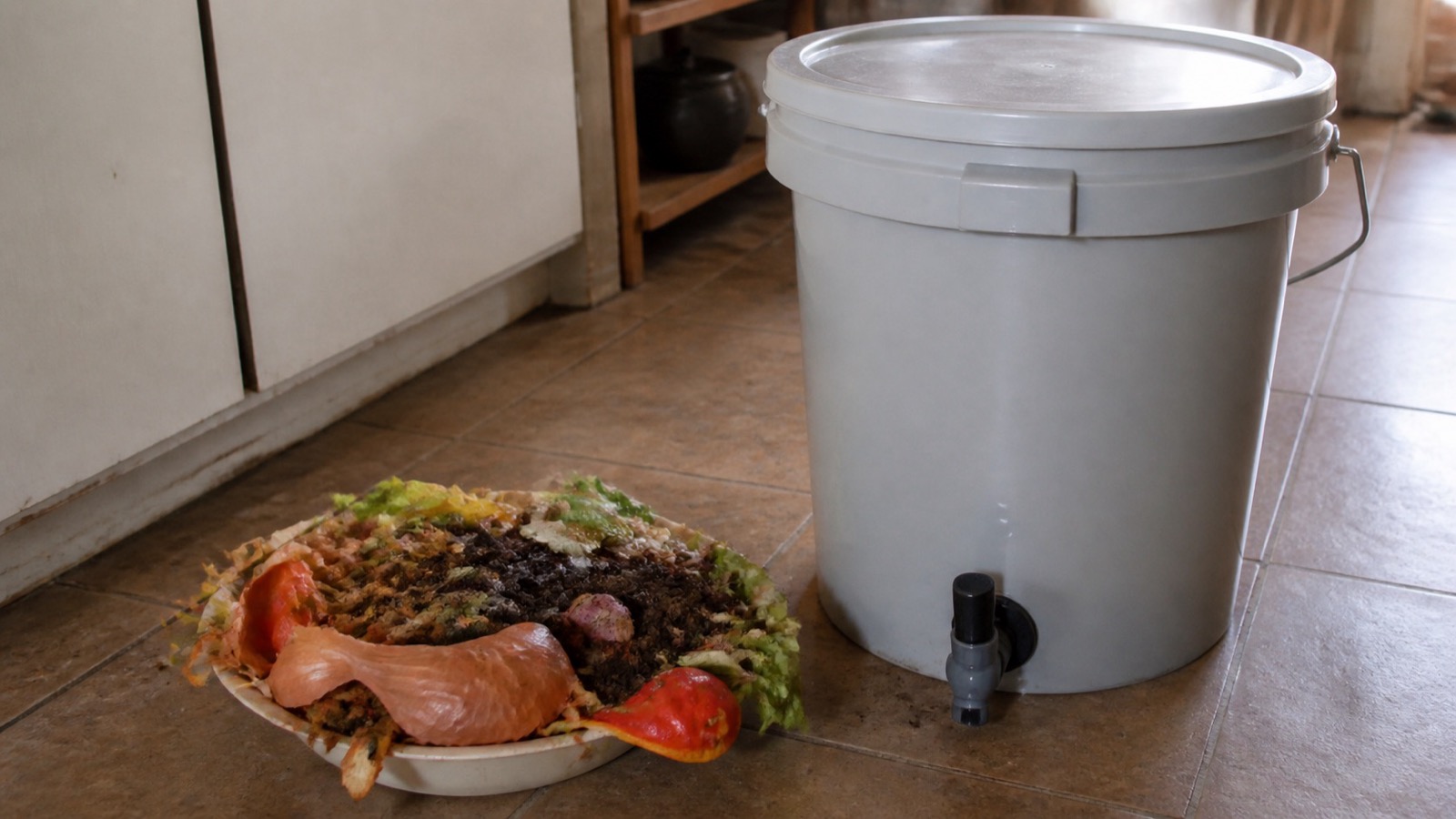
How it works
Layer food waste with bokashi bran carrying lactic acid bacteria, press it down, exclude air, seal. Over two weeks the contents ferment rather than rot: pickling, essentially. Drain the liquid every few days.
What it does well
Takes meat, dairy and cooked food that no domestic pile can handle. Works entirely indoors. No aeration, no turning, no smell beyond a sour pickle note when you open it.
The part people miss
What comes out is not finished compost. It is acidic, recognisable food waste that must then be buried in soil or added to a conventional pile, where it breaks down in a few weeks. If you have nowhere to bury it, bokashi does not solve your problem, it relocates it.
The liquid
Drain it regularly or the bucket goes anaerobic in the wrong way. Diluted heavily (1:100) it can go on plants; undiluted it is strong enough to be used as a drain cleaner.
Related
For meat and dairy specifically: can you compost meat. All methods: types of composting.
Further reading on bokashi
Independent sources worth reading alongside this page: EPA, Composting at Home · Cornell Waste Management Institute.