Backyard composting
A heap or bin in a corner, fed as you go, turned when you remember. It is what most people mean by composting, it needs almost no equipment, and it works. Below: how backyard composting works in practice, what it demands of you, and who it actually suits.
What you need
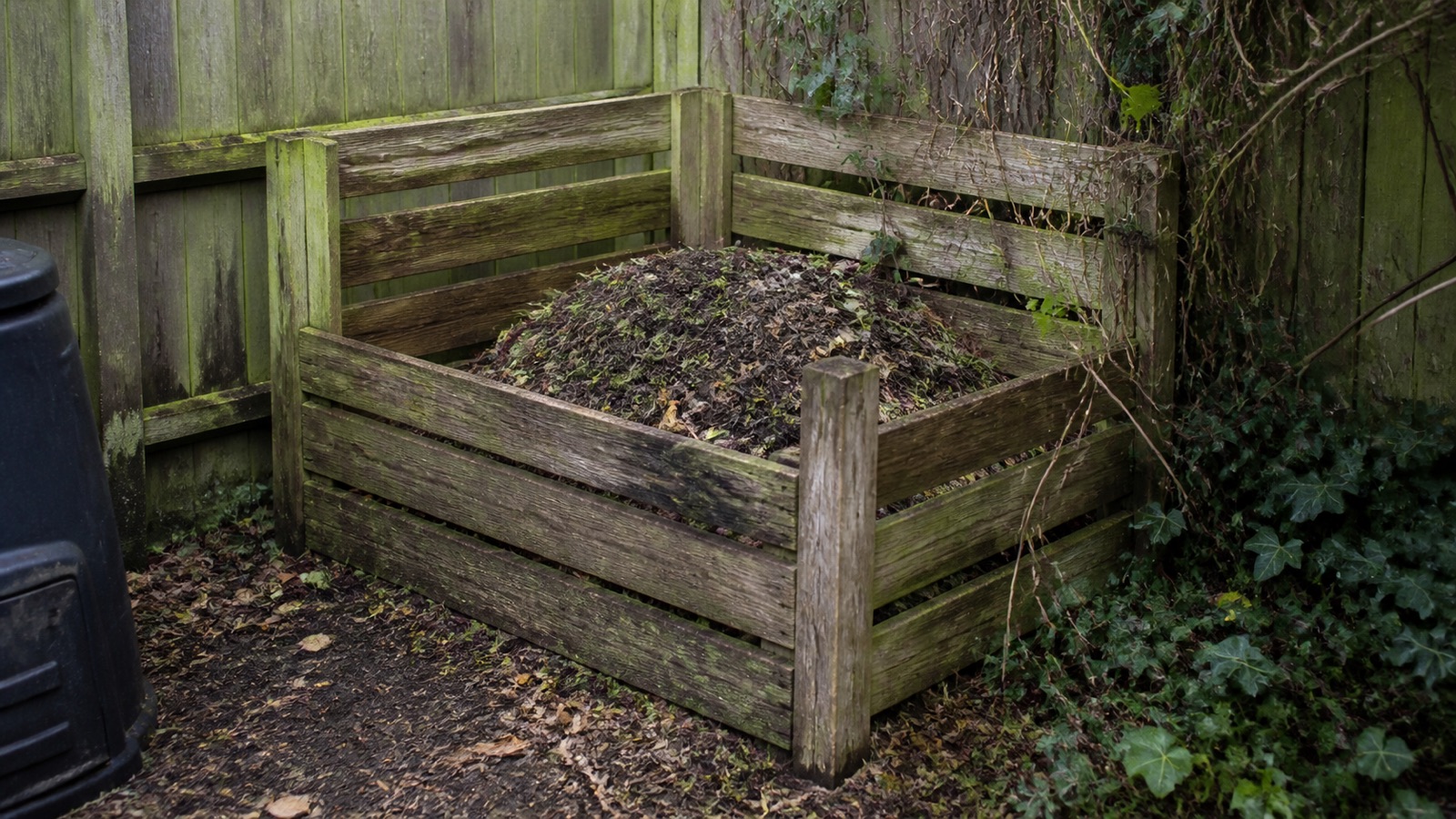
A location on bare soil, ideally partly shaded so it does not bake dry. A container is optional. An open heap composts perfectly well and is easier to turn. A bin looks tidier and holds heat slightly better.
How to run it
Add greens and browns roughly equally as they arise. Bury food scraps under dry material. Turn it when you have the energy; more turning means faster compost, and never turning still works.
What to expect
Six months to a year for the bottom of the pile to be usable, longer if you never turn it. The perpetual-pile problem is real: the top is always new. Two bins, one filling, one finishing, is the upgrade that solves it.
Related
Comparison of all methods: types of composting. Practical basics: how to compost.
Further reading on backyard composting
Independent sources worth reading alongside this page: EPA, Composting at Home · Cornell Waste Management Institute.