Disclosure: when this guide recommends a product, some links will earn us a commission at no extra cost to you. It does not change what gets recommended, see our editorial policy.
How to choose a compost bin
The bin matters far less than most buying guides imply. Compost happens because of what you put in and how often you turn it, not because of the container. Buy for your space, your volume and your back, then stop thinking about it. Below: the practical detail on compost bin, and what most guides leave out.
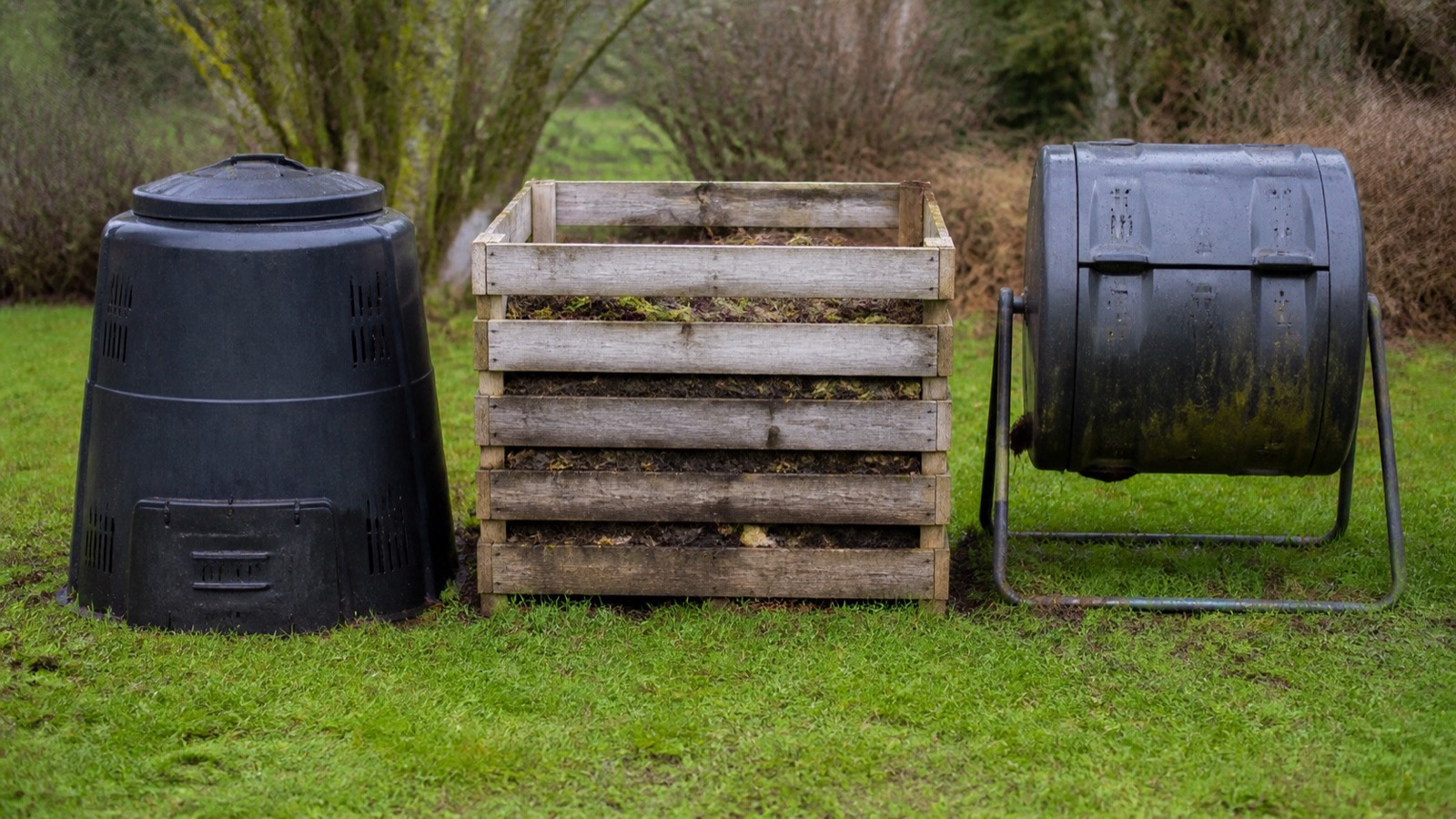
Match the type to your situation
| Type | Best for | The real drawback |
|---|---|---|
| Open heap or bay | Gardens with space and steady garden waste | Looks untidy; needs a physical barrier if rodents are around |
| Plastic “dalek” bin | Small gardens, kitchen scraps, low effort | Very hard to turn; the useful compost is at the bottom under everything else |
| Tumbler | People who want to turn easily and keep rodents out | Small capacity for the price; heavy to rotate when full; can go waterlogged with no drainage |
| Worm bin | Flats, balconies, kitchen waste only | Livestock. It needs attention, and it will not take garden waste |
| Bokashi bucket | Meat and dairy, indoor use, no outdoor space | Not composting, it ferments. The output still has to go somewhere. |
What actually matters when comparing
Capacity you will genuinely fill. An underfilled bin never gets hot. Most households overestimate their volume; a 220L bin is plenty for kitchen scraps and a modest garden.
How you get compost out. This is the question people regret not asking. A hatch at the bottom of a full bin sounds fine and is miserable in practice. Bins that lift off, or bays you can fork straight out of, are far easier.
Drainage and ground contact. Contact with soil lets worms and microbes in on their own. Sealed tumblers cut that off, which is a fair trade for rodent-proofing, but they need drainage holes or they turn into a sour soup.
Whether you can turn it. Turning is the main lever you have over speed. If a design makes turning hard, it is choosing slow compost for you.
UV stability, if plastic. Cheap recycled plastic goes brittle after a few summers and cracks. This is where paying more genuinely buys longevity.
What does not matter as much as advertised
Aeration bars, “accelerator” panels, thermometer ports and dual chambers all appear in marketing copy and rarely change outcomes. A dual-chamber tumbler is two small bins rather than one usable one. Compost activator sachets are, in a pile with adequate nitrogen, unnecessary.
Before you buy anything
If you are new to this, start with a heap or the cheapest bin you can find and run it for one season. You will learn more about what you need from your own pile than from any comparison table, including this one, and you may find you do not need to buy anything at all.
Compare the methods themselves at types of composting, or start from scratch at how to compost.
Before you buy anything, read this
Composting 101 covers building and running a pile with whatever container you end up with, and might convince you that you do not need to buy one at all. Free, 14 pages.
Further reading on compost bin
Independent sources worth reading alongside this page: EPA, Composting at Home · Cornell Waste Management Institute.